



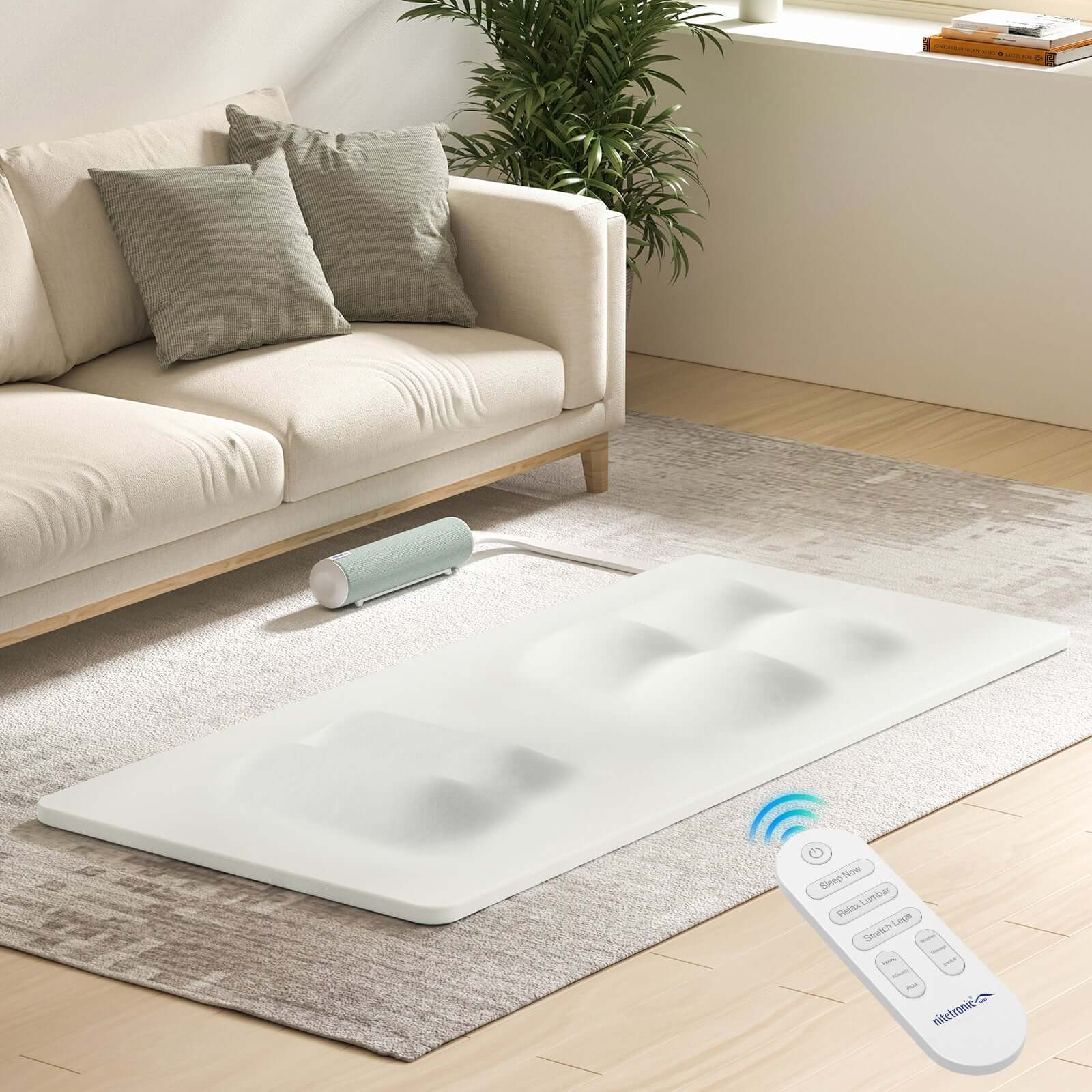



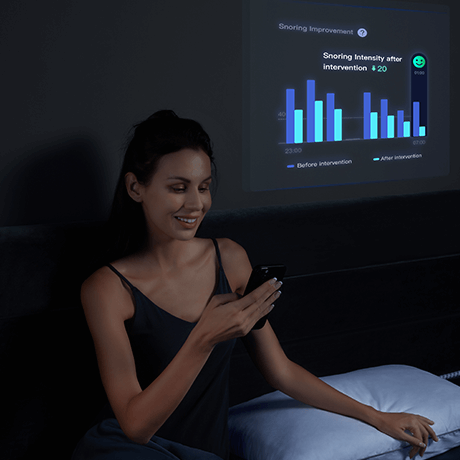
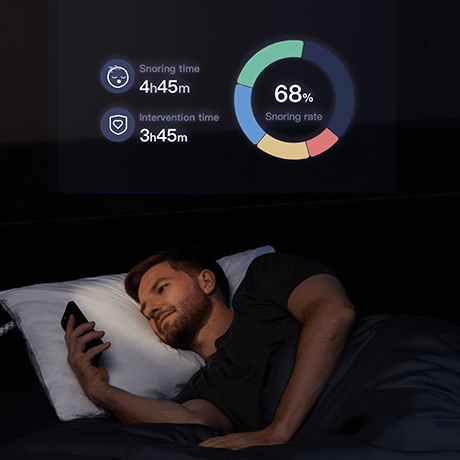
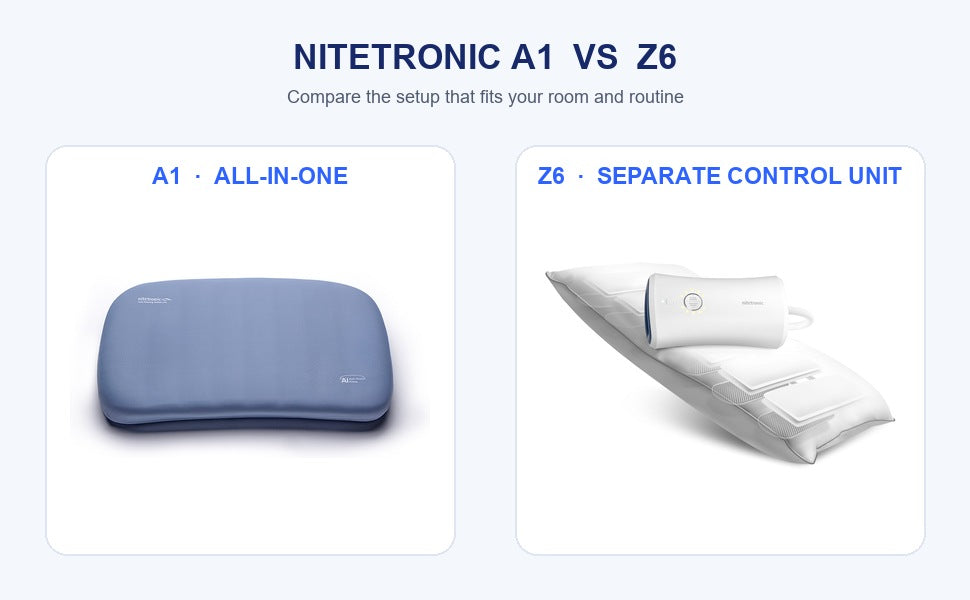
App requirements by model: The A1 AI Anti-Snore Pillow requires the companion smartphone app during use. Your phone detects snoring; the A1 does not have built-in, independent snore detection. The Z6 and Z1 Smart Anti-Snore Pillows have built-in snore detection and can operate independently without a smartphone app. Their app lets you view sleep data.
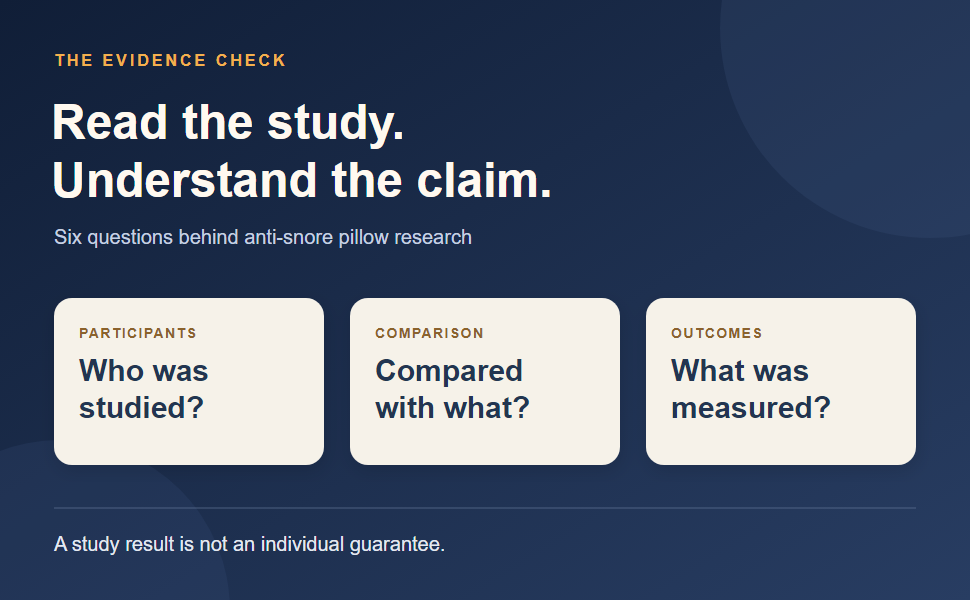
An anti-snore pillow can be described as clinically tested, supported by research, or associated with a percentage reduction in snoring. Those phrases are a starting point for questions, not a promise about your own nights. To understand a claim, connect it to the exact product, the people studied, and the outcome that was measured.
This guide focuses on reading research. For everyday customer experiences, use our separate guide to reading anti-snore pillow reviews.
1. Was the same product actually studied?
Start with the model name and the version used in the research. A study of head-position adjustment does not automatically validate every pillow that uses that idea. Changes in shape, sensors, adjustment behavior, or software can matter when deciding whether a report applies to a current product.
Ask for the full study citation and look for the tested device in the methods. A brand name on a summary page is not enough to establish that the exact model in your cart was tested.
When comparing the Nitetronic A1 and Nitetronic Z6, use their current product pages to check the hardware and setup information. Then ask which evidence supports any particular performance claim. Do not transfer a result between models simply because they share a brand.
2. Who took part—and who was excluded?
A study describes a particular group, not everyone who snores. Check the number of participants, entry criteria, exclusions, and how many people completed the study. Also read the author affiliations and funding disclosures for context; these do not replace checking the methods and results.
For example, a 2017 randomized crossover study of a head-position-changing pillow enrolled adults who snored and excluded obstructive sleep apnea. That matters: evidence from a non-apneic snoring group should not be presented as proof that a pillow treats sleep apnea.
You do not need to match every participant detail to learn something from a paper. You do need to notice when the people studied differ substantially from the people a marketing claim appears to cover.
3. What was the comparison?
Read what happened in the comparison condition. Was the pillow activated or inactive? Was there a different pillow, or only a person's recollection of earlier sleep? Were the same participants assessed in both conditions?
In a crossover design, participants receive different interventions or conditions in sequence. Check how the sequence was assigned and how long each period lasted. The ClinicalTrials.gov glossary explains study-design terms if the methods are unfamiliar.
An enthusiastic testimonial, a before-and-after app screenshot, and a controlled study answer different questions. Do not treat them as interchangeable forms of evidence.
4. Was the outcome snoring, breathing, or comfort?
Write down the actual endpoint before interpreting the result. A paper might measure a snoring index, a partner's rating, a breathing-related measure, or pillow acceptance. These are different outcomes.
The 2017 paper reported reduced snoring on the activated pillow and no deterioration in other respiratory parameters. That is not the same as demonstrating improved oxygen levels, and it does not establish a hidden breathing benefit in people whose snoring did not improve.
A useful question for any claim is: "Which measurement supports this exact sentence?" If a study measured sound, do not silently turn its conclusion into an oxygenation claim. For the related limits of consumer reports, see our smart-pillow sleep-data guide.
5. What does the percentage mean?
A reduction percentage needs a starting value, an ending value, and a definition of the metric. Here is a hypothetical arithmetic example—not a Nitetronic result or a study finding:
- Snoring occupies 30% of one comparable recording and 15% of another.
- The difference is 15 percentage points.
- Relative to the starting value, the reduction is 50%: (30 - 15) / 30.
That does not mean 50% of people stopped snoring. It also does not mean the person became snore-free, or that breathing improved by 50%.
Check the denominator too. Time spent snoring as a share of recording time is not automatically the same as a share of measured sleep time. Compare like with like, and label examples clearly.
6. Is the result an average or an individual outcome?
A group average does not tell you that every participant improved by that amount. Look for the spread of results, how improvement was defined, and whether the paper reports a responder rate separately from a mean change.
Statistical significance is another distinct idea. A p-value is not the percentage of customers for whom a product will work. Read it alongside the study design, the size of the observed change, and the uncertainty reported by the researchers.
Finally, check the observation period and what was recorded about comfort or interruptions. Evidence collected over a defined period should not be rewritten as a lifetime guarantee.
Turn the research into better buying questions
Keep a short evidence note: exact model, participant group, comparison, measured outcome, and study length. If one of those is missing, ask for the report rather than filling in the gap yourself. Our anti-snore pillow buying checklist covers practical considerations beyond the research.
Nitetronic smart anti-snore pillows are consumer sleep-support products, not substitutes for sleep-apnea diagnosis or prescribed treatment. Witnessed breathing pauses, gasping, or persistent daytime sleepiness deserve professional assessment; the NHLBI symptom guide explains these warning signs. Do not change prescribed care based on a pillow claim or favorable sound recording.
FAQ
Does clinically tested mean a pillow will work for me?
No. It describes testing under particular conditions. Whether the findings apply depends on the device, participant group, outcomes, and limitations; individual results can differ.
Does less snoring prove better blood oxygen?
No. Snoring and blood oxygen are different measurements. A claim about oxygen needs evidence that measured and supports that outcome, not an inference from quieter sound alone.
Is a 50% reduction the same as a 50% success rate?
No. A relative reduction describes a change in a defined metric. A success or responder rate describes the share of people meeting a stated criterion. The definitions must be provided before either figure is useful.
What should I request if an advertisement only says clinically proven?
Ask for the study citation, tested model, participant criteria, comparison condition, outcome definition, and observation period. A clear answer should connect the claim to the evidence without promising an individual result.

Leave a comment
This site is protected by hCaptcha and the hCaptcha Privacy Policy and Terms of Service apply.