





If your snoring changes when you roll onto your back, sleep position may be part of the picture. Side sleeping can help some people snore less because it may reduce the tendency of the tongue and soft tissues to move backward and narrow the airway. But simply turning onto your side is not always comfortable—or easy to maintain all night. Pillow height, shoulder space, and neck support can make the difference between a position you briefly try and one you can actually keep.
This guide explains what to look for in an anti-snore pillow for side sleepers, how to check your alignment, and when snoring deserves medical attention.
Important: A pillow may support positioning and comfort, but it does not diagnose or treat obstructive sleep apnea. Loud habitual snoring, breathing pauses, gasping, morning headaches, or excessive daytime sleepiness should be discussed with a healthcare professional.
Why sleep position can affect snoring
Snoring occurs when airflow makes relaxed tissues in the upper airway vibrate. For some sleepers, the problem becomes more noticeable when lying on the back. In that position, gravity can encourage the tongue and soft palate to move toward the back of the throat.
Side sleeping changes that relationship. Mayo Clinic includes side sleeping among its home-care suggestions for snoring, and the U.S. National Heart, Lung, and Blood Institute notes that a healthcare provider may recommend side sleeping as part of care for some people with sleep apnea.
That does not mean side sleeping solves every cause of snoring. Nasal congestion, alcohol, sleep deprivation, anatomy, body weight, medications, and sleep disorders can all matter. Think of sleep position as one adjustable part of a larger sleep routine.
Pillow height: the side sleeper’s balancing act
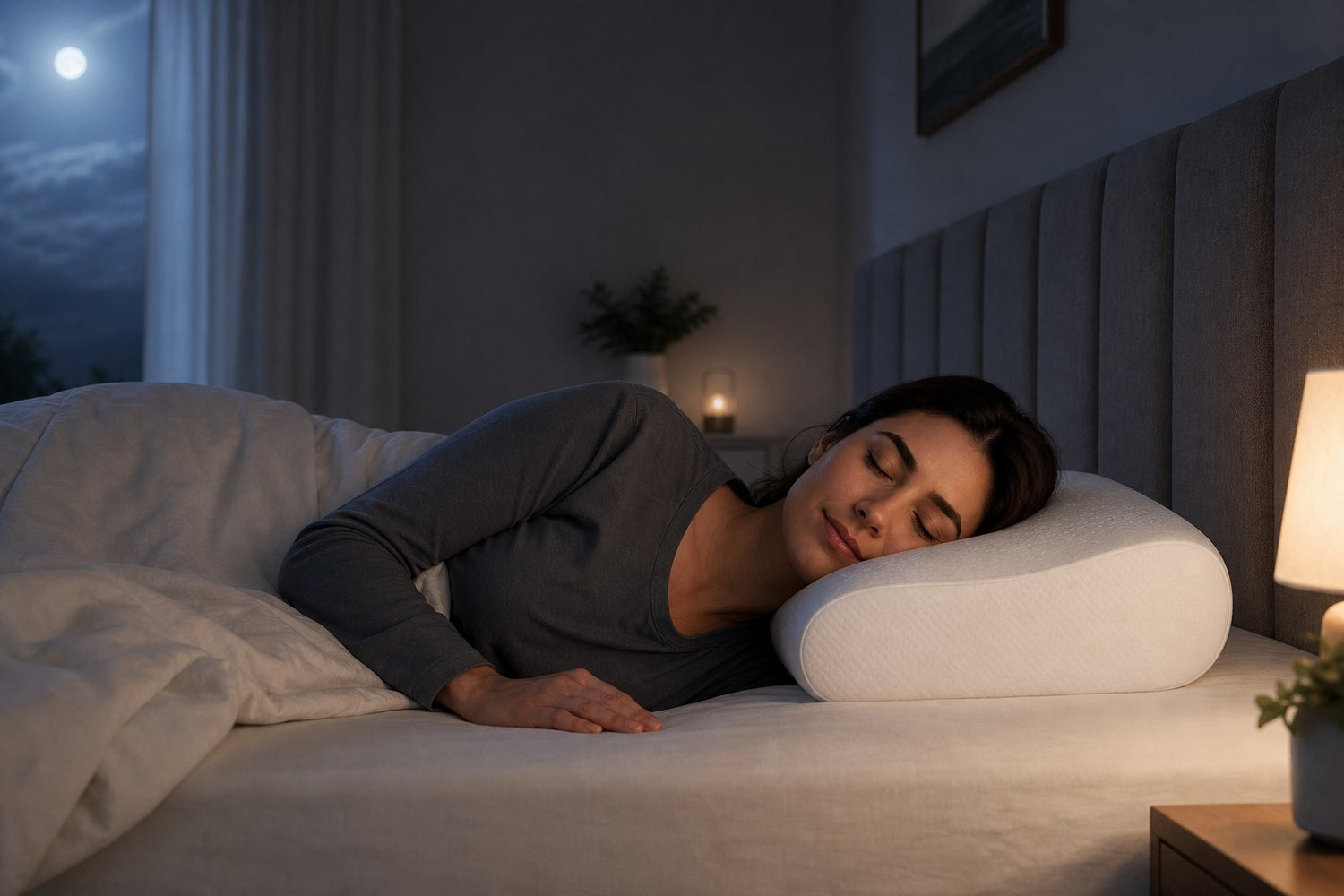
When you sleep on your side, your shoulder creates a gap between your head and the mattress. A pillow needs enough loft to fill that space without pushing the head too far upward.
A useful neutral-alignment check is to imagine a straight line from the center of your forehead through your nose, chin, and breastbone. If your pillow is too low, your head may tilt down toward the mattress. If it is too high, your head may tilt away from it. Either extreme can create neck discomfort and make side sleeping harder to sustain.
The right height varies with shoulder width, mattress firmness, body size, pillow compression, and preferred side-sleeping posture. Broad-shouldered sleepers and people on firmer mattresses often need more loft. A softer mattress lets the shoulder sink farther, which may reduce the required pillow height. Adjustable designs can be useful because they let you fine-tune the fit instead of relying on a single fixed profile.
Five features to look for in a side-sleeper anti-snore pillow
1. Stable head and neck support
The pillow should support a comfortable, neutral position without feeling rigid. Support matters most after the material warms and compresses, not just during a quick showroom test.
2. A side-sleeping zone
Contours or shoulder cutouts can create room for the shoulder and arm. This may reduce the urge to roll onto your back because of pressure or numbness.
3. Adjustable loft
Removable layers or multiple height zones make it easier to match the pillow to your shoulder width and mattress. Small height changes can feel significant over a full night.
4. Shape that discourages back sleeping
Some positional pillows use a central contour or ridge to make side sleeping more natural. The goal should be a gentle cue, not a forced or painful posture.
5. Breathable, washable materials
Heat and hygiene affect whether you will use a pillow consistently. Look for a removable washable cover and follow the care instructions for the pillow core.
A simple fit test at home
Give yourself several nights to evaluate a new shape or loft.
- Lie on your usual side with your shoulders relaxed.
- Ask someone to check whether your head appears level with your spine.
- Notice pressure at the ear, jaw, neck, shoulder, and upper arm.
- Check whether your lower arm has a comfortable place to rest.
- In the morning, record neck comfort, awakenings, dry mouth, and your partner’s observations about snoring.
A sleep-tracking app or audio recording can help you spot patterns, but consumer tracking is not a medical diagnosis. Look for consistent trends across several nights rather than judging a pillow from one unusually good or bad night.
Side sleeping versus simply elevating the head
Side sleeping and head elevation are different strategies. Raising the head of the bed may help some people, while stacking ordinary pillows can bend the neck or collapse during the night. If you experiment with elevation, keep the neck comfortably supported and avoid a sharp chin-to-chest angle.
For people who naturally sleep on their side, a dedicated side-sleeper pillow is usually aimed at filling the shoulder gap and maintaining alignment. For people who repeatedly roll onto their back, a positional design may also help make the side position easier to maintain.
Where the Nitetronic Z10 fits
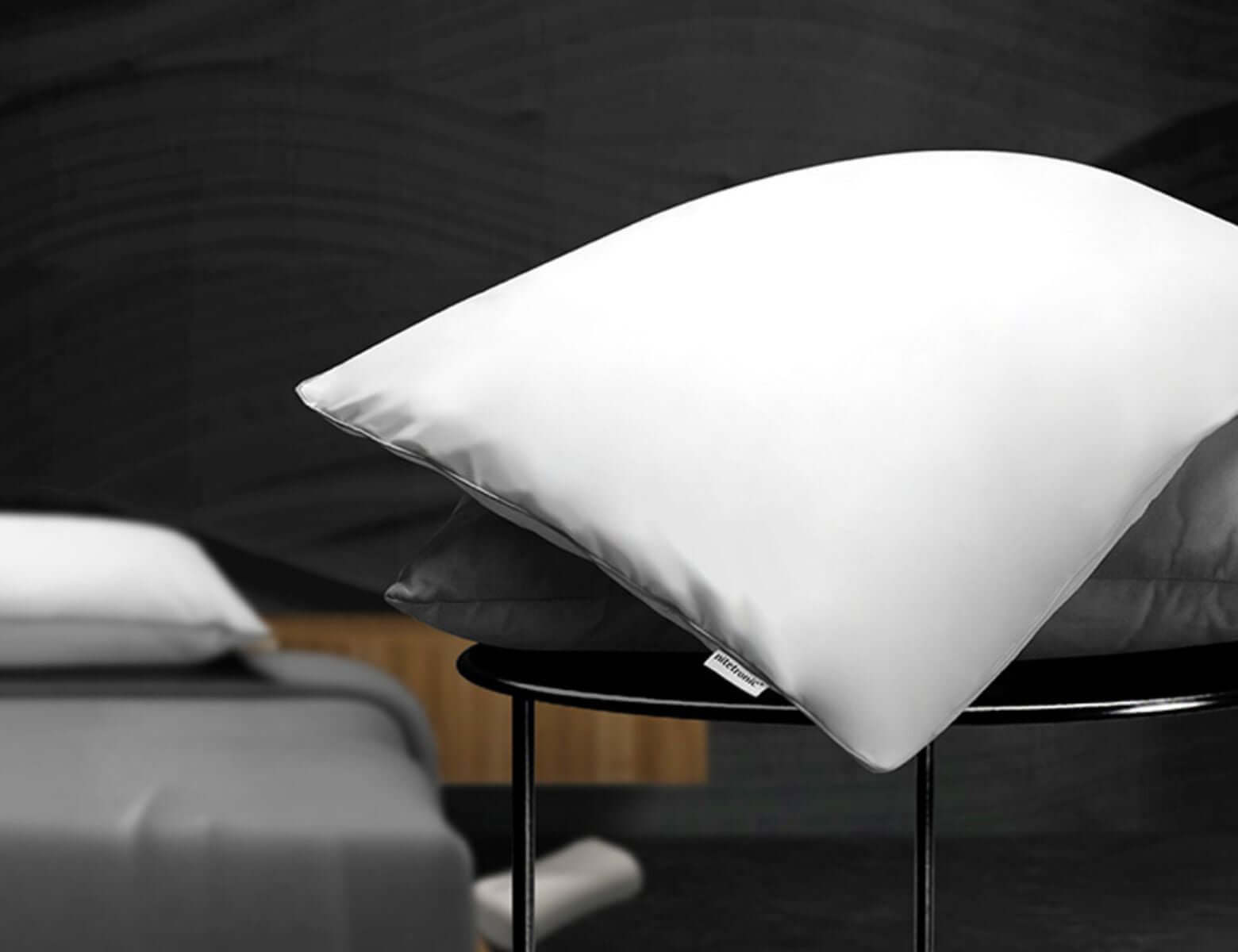
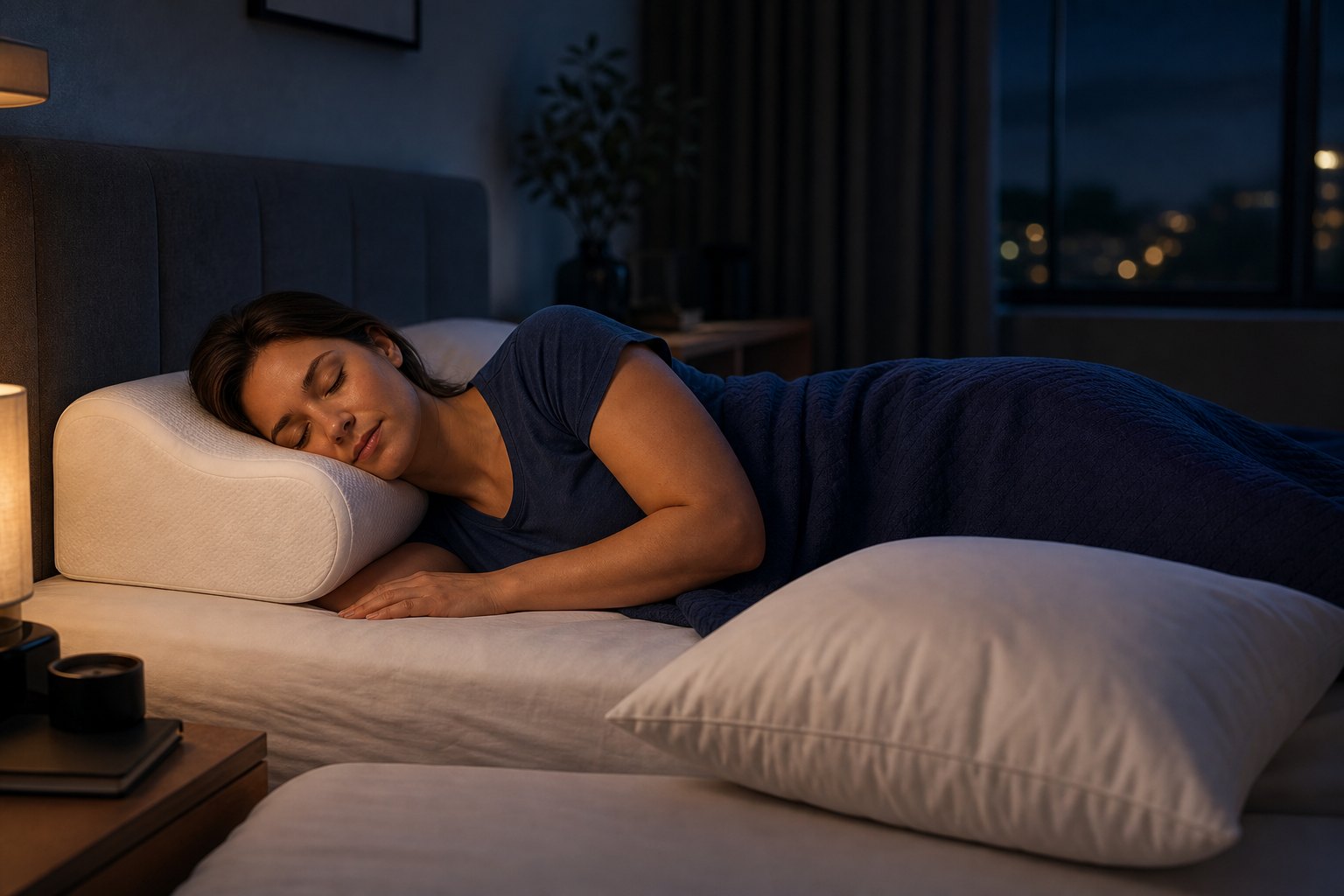
The Nitetronic Z10 Side-Sleeping Anti-Snore Pillow is a non-electronic positional pillow. It uses a contoured central structure, two height zones, removable adjustment inserts, and recessed areas intended to give the shoulder and arm more room during side sleeping. Its open-cell viscoelastic polyurethane foam core is paired with a removable cover.
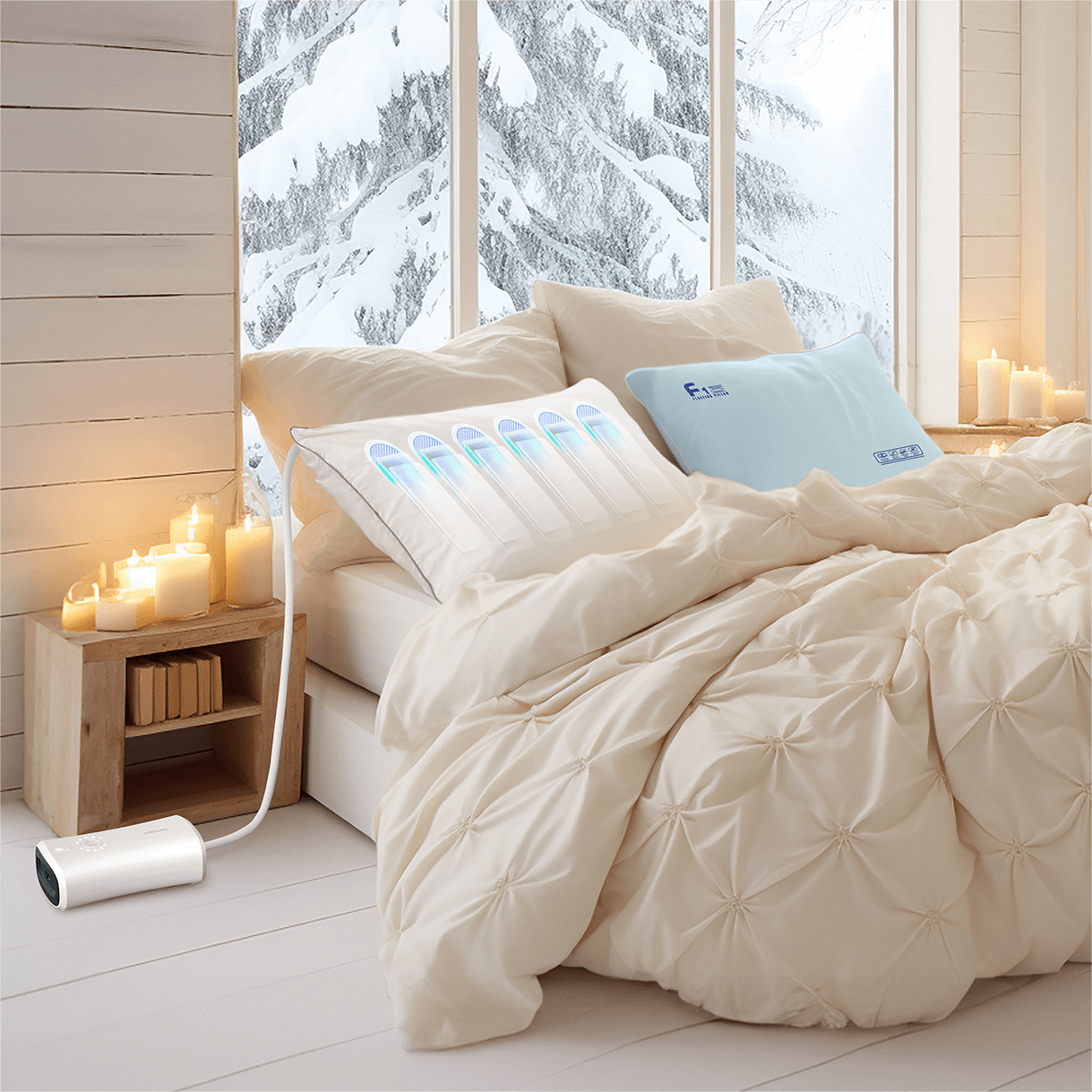
If you prefer active snore detection or app-based sleep tracking, compare the different designs in the Nitetronic anti-snore pillow collection. The best choice depends on whether you want passive ergonomic support, smart adjustment, or sleep data.
Not sure where to start? Take the Nitetronic Snoring Quiz or review the frequently asked questions.
When to talk with a healthcare professional
Do not treat persistent loud snoring as only a pillow problem. According to the National Heart, Lung, and Blood Institute, possible sleep apnea symptoms include breathing that starts and stops, gasping for air, frequent loud snoring, and daytime sleepiness. A sleep study may be needed for diagnosis.
Seek professional advice if you or a bed partner notices breathing pauses, choking or gasping during sleep, significant daytime sleepiness, morning headaches, difficulty concentrating, or snoring that is loud, frequent, or getting worse.
If you already use CPAP or another prescribed treatment, do not replace it with a pillow unless your clinician advises you to do so.
Frequently asked questions
Does side sleeping stop snoring?
It may reduce snoring for some people, especially when snoring is worse on the back, but results vary. Snoring has many possible causes, and persistent symptoms may require professional evaluation.
How high should a pillow be for a side sleeper?
It should generally fill the space between the shoulder and head while keeping the neck comfortably aligned. Shoulder width, mattress firmness, body size, and pillow compression all affect the ideal height.
Is a firm or soft pillow better for snoring?
Support and fit matter more than a simple firm-versus-soft label. The pillow should resist collapsing enough to maintain your chosen position without creating uncomfortable pressure.
Can an anti-snore pillow treat sleep apnea?
No pillow should be presented as a substitute for diagnosis or prescribed sleep apnea treatment. Positional support may be useful for some people, but suspected sleep apnea should be discussed with a healthcare professional.
How long should I try a new side-sleeper pillow?
Allow several nights for your body to adapt, provided the pillow is not causing pain, numbness, or worsening symptoms. Adjust the loft gradually and keep notes on comfort and sleep patterns.
The takeaway
The best pillow for a side sleeper is one that makes a comfortable position repeatable. Start with neutral neck alignment, enough room for the shoulder, appropriate loft, and materials you can live with night after night. If side sleeping reduces your snoring but is difficult to maintain, an adjustable positional pillow may be worth considering.
Most importantly, pay attention to warning signs. A pillow can support sleep position; it cannot rule out sleep apnea or replace appropriate medical care.


Leave a comment
This site is protected by hCaptcha and the hCaptcha Privacy Policy and Terms of Service apply.