








An adjustable bed changes the angle of the surface beneath your pillow. That can change where the pillow rests relative to your shoulders and how cables or tubing run beside the bed. Before using a smart anti-snore pillow with an adjustable base, check the exact product and bed instructions together.
The checks below are practical setup questions. They do not establish that a particular pillow is compatible with every adjustable bed, and they do not predict snoring results.
This article focuses on the movement of an adjustable base. For a standard bedside arrangement, see the smart pillow setup checklist.
1. Confirm the exact pillow and bed models
“Adjustable bed” can describe many bases with different moving sections, clearances, and controller locations. Start with the model names on both the pillow and the bed base. Check the current pillow manual and the bed maker’s instructions for any compatibility notes or limits.
If neither manual addresses the combination, contact the pillow maker with the exact base model before setting it up. Do not infer compatibility from a photograph or from another person’s setup.
2. Check where the pillow sits as the bed moves
With the bed stationary, look at the pillow’s position on the mattress. Then use the bed’s normal controls to move through the positions you plan to use. Check that the pillow remains on the intended part of the mattress and that its placement still feels comfortable.
The relationship between a pillow, shoulders, and head can feel different when the mattress angle changes. That is a comfort and fit observation; it is not evidence that a raised position will reduce snoring.
3. Trace every cable or tube before moving the base
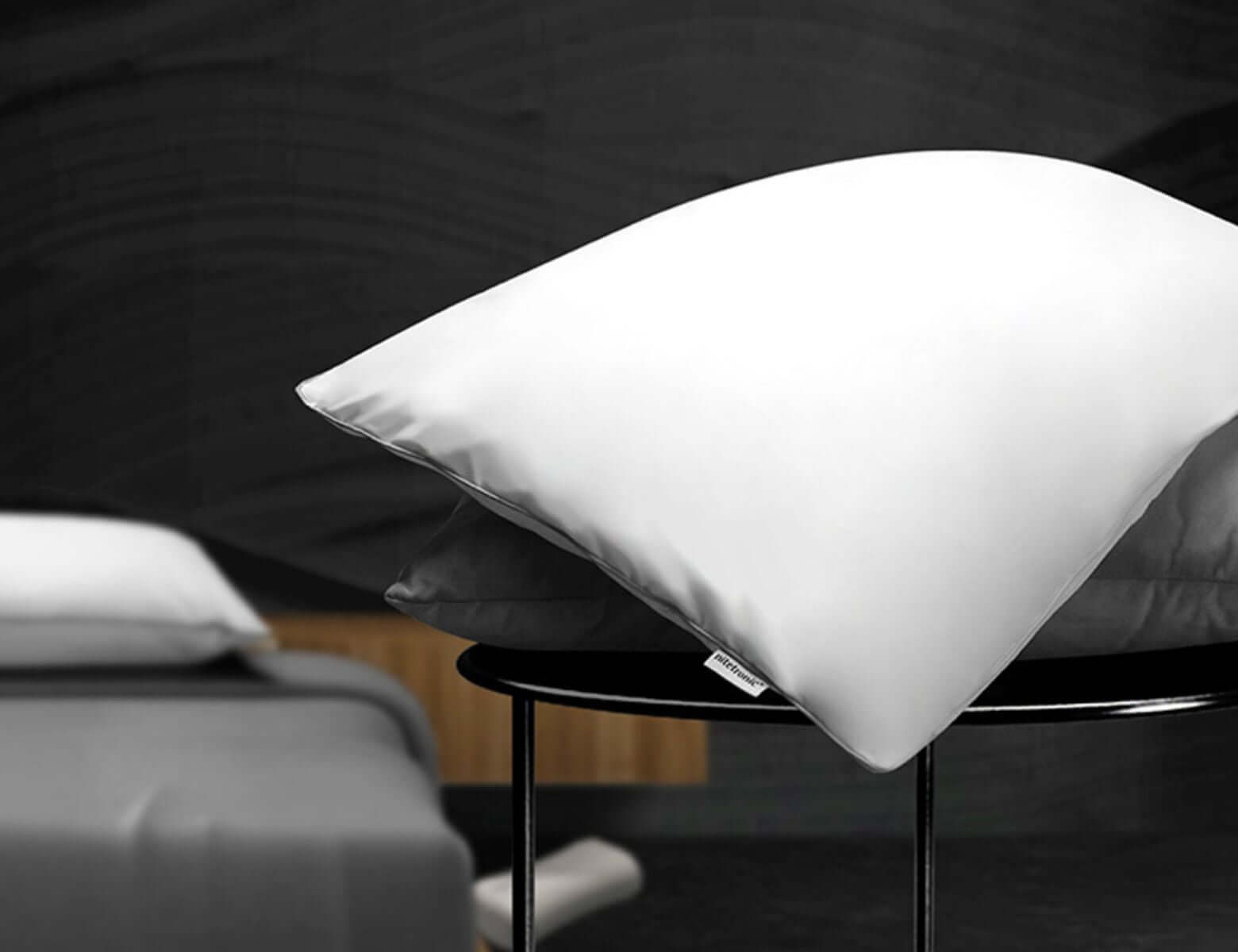
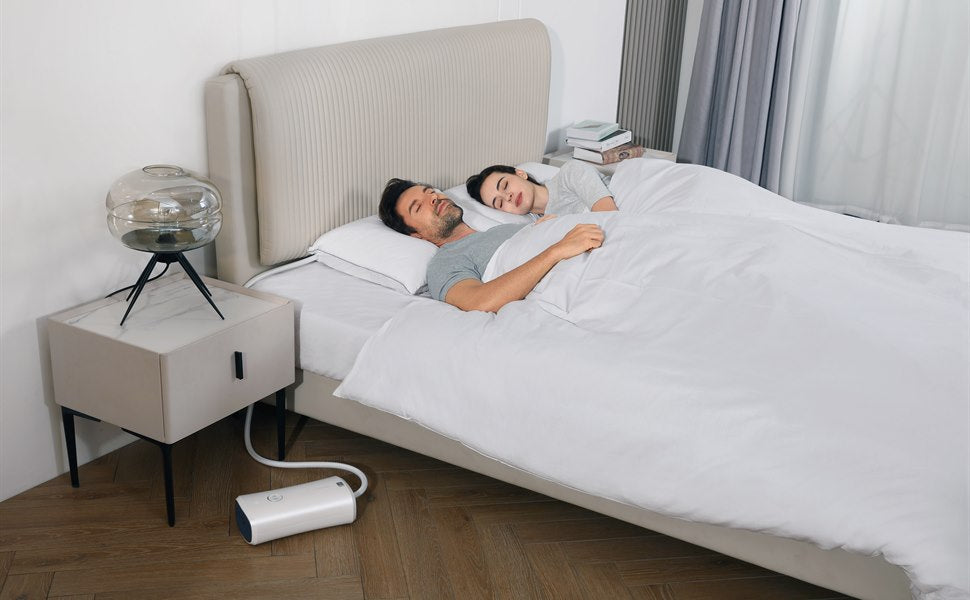
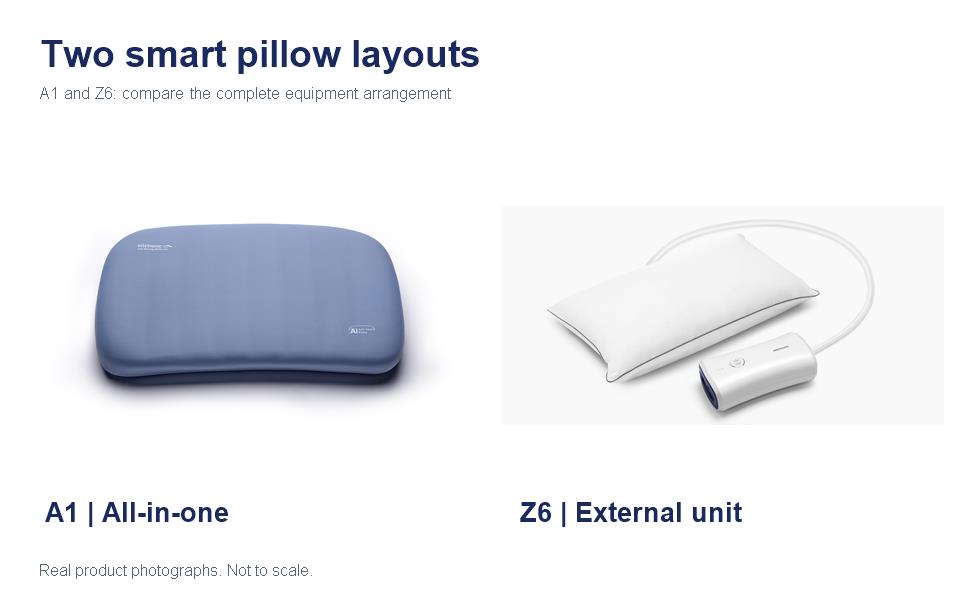
Some smart pillows use a separate control unit and connecting tube; other models use an all-in-one layout. For example, Nitetronic describes the A1 as an all-in-one design, while its Z6 setup overview shows a separate bedside unit.
Follow the instructions for your exact model. Check that any cable or tube has the required slack and cannot be pinched, pulled, or caught by the moving bed frame. If the instructions do not show a safe route, ask the manufacturer before operating the base with the pillow connected.
4. Place any separate unit according to its instructions
If your model has an external control unit, find out where the manufacturer recommends placing it. Do not put it on a section that moves unless the product instructions explicitly allow that placement. Keep the unit and its connections away from hinges, pinch points, and walkways, while following the ventilation and power guidance in the manual.
An integrated design and an external-unit design describe different equipment layouts. They do not, by themselves, establish which model is compatible with a particular adjustable base.
5. Recheck comfort at your usual bed positions
After confirming the setup instructions, check the pillow with the base flat and at the ordinary positions you use. Use only the pillow’s approved adjustments, and avoid adding improvised wedges or layers that could change how the pillow is intended to sit.
If the pillow shifts, the connection becomes taut, or the position feels uncomfortable, return the bed to a stationary position and follow the product support instructions before continuing.
6. Keep observations separate from treatment decisions
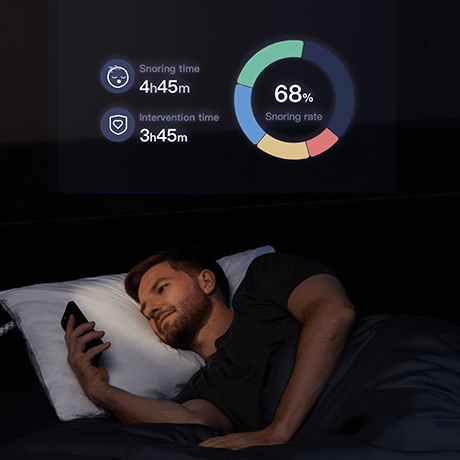
If you choose to compare nights, record the bed position and pillow settings so you know what changed. Treat app or sound summaries as consumer sleep-support information, not as a diagnosis or proof that a position is treating a medical condition.
Smart anti-snore pillows do not replace sleep-apnea evaluation or prescribed treatment. If you have been diagnosed with sleep apnea or use prescribed equipment, follow your clinician’s advice and ask them about any change to your sleep setup.
For model-specific placement questions, see the Nitetronic A1, Nitetronic Z6, and support page.
Frequently asked questions
Is every smart anti-snore pillow compatible with an adjustable bed?
Do not assume so. Compatibility depends on the exact pillow and bed models and their instructions. Ask the manufacturer if the manuals do not cover the combination.
Does raising an adjustable bed stop snoring?
This guide does not make that claim. A change in bed angle is not proof of an anti-snoring effect. Ask a clinician about sleep-related symptoms or treatment questions.
Is A1 or Z6 the better choice for an adjustable base?
The equipment layouts differ: A1 is described as all-in-one, while Z6 uses a separate unit in the published setup overview. Choose only after confirming the exact model’s compatibility and placement requirements with the manufacturer.
What should I do if a cable or tube becomes tight when the bed moves?
Stop moving the base, return it to a stationary position as directed, and consult the pillow and bed instructions or support teams. Do not stretch, reroute, or modify a connection unless the manufacturer tells you how.

Leave a comment
This site is protected by hCaptcha and the hCaptcha Privacy Policy and Terms of Service apply.