








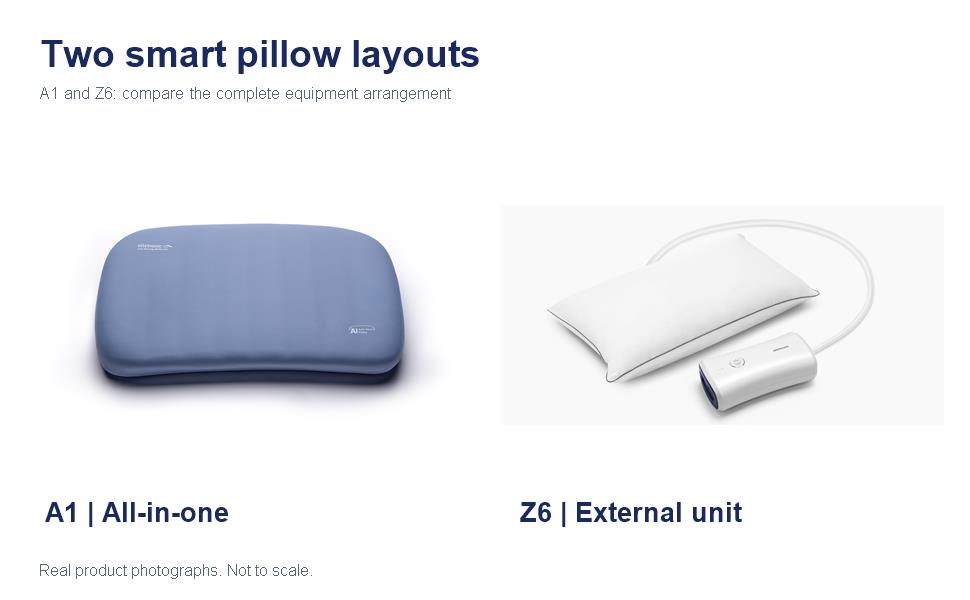
Two smart pillows can look similar in a product listing yet leave a very different arrangement beside your bed. One may keep its operating components inside the pillow. Another may connect the pillow to a separate unit through an air tube.
If you are comparing a smart pillow for snoring, this difference is worth checking before you buy. It affects the space you need and how you arrange the equipment. It does not, by itself, tell you which pillow will be more comfortable or help you more.
What does all-in-one mean?
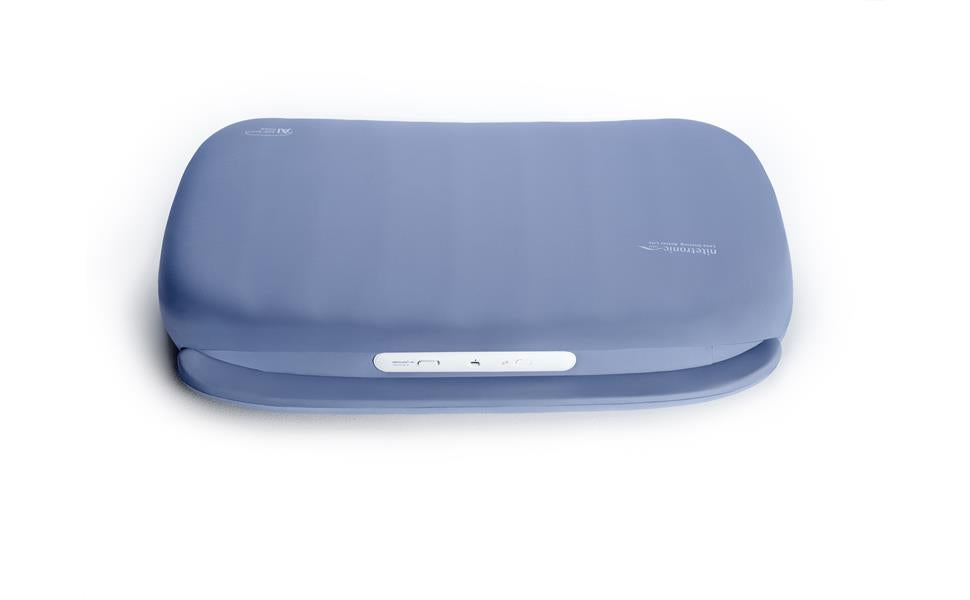
An all-in-one design puts the operating assembly into the pillow rather than using a separate external pump housing. The Nitetronic A1 is described this way on its product page.
The practical benefit is a simpler equipment layout: there is no separate pump box to find a place for. But all-in-one does not mean cordless. Check the model's power instructions, cable arrangement, and included accessories instead of assuming that an integrated design runs on a battery.
For someone with a small bedside table, that distinction may matter more than a long list of app features. Sketch the available space first, including a lamp, phone, glasses, or anything else you keep within reach.
What does an external-pump design add?
With an external unit, the pillow and pump housing are separate parts of the setup. The Nitetronic Z6 product photographs show its pillow connected by a tube to a separate bedside unit.
That layout gives you another component to position according to the manufacturer's instructions. Look at the whole assembly in the product photographs, not just the cushion. Before ordering, ask for the unit dimensions and connection requirements if they are not clear in the listing.
Neither arrangement is automatically better. An integrated design may suit a person who wants fewer separate objects; an external-unit design may suit someone whose room already has a suitable place for the equipment.
Compare four practical details
1. The complete footprint
Measure the pillow area as well as the space around the bed. Include the route to a suitable power outlet and, where relevant, the separate housing and tubing. Check access to a drawer or bedside cabinet that you open regularly.
A photo of the room can help when asking support about placement. Keep the question concrete: does this exact model fit the intended location, and what clearances does its manual require? Follow the answer and the current instructions rather than improvising a hidden installation.
2. The way you reach the controls
Look for photographs showing where the physical controls sit. Consider whether you can reach them comfortably from your normal sleeping position. If another person helps with setup, agree on a layout that works for both of you.
App control is a separate consideration. A compact design is not proof that an app is mandatory, and an external unit is not proof that every setting is available on the housing. Our guide to Wi-Fi and app requirements explains why these questions should be checked separately.
3. What you would pack for a trip
Compare the complete packing list, including the power equipment, any separate unit, and the accessories specified for your model. A pillow-only photograph does not show everything that may need to travel with you.
Before calling one model more portable, compare its actual dimensions and weight with the space in your bag. If travel is the deciding factor, use the hotel setup checklist to plan the questions to ask before departure.
4. Sound and comfort expectations
The location of a pump does not establish how noticeable a product will be in your bedroom. Avoid treating the words integrated, quiet, or silent as an interchangeable promise about your own experience.
Ask how the product operates and how to assess it under the applicable trial terms. If the seller quotes a sound measurement, ask which operating condition and measurement method it describes. Evaluate comfort and any perceived movement separately from the equipment's appearance.
Keep layout separate from the sleep goal
Choosing between an integrated pillow and a separate bedside unit is a practical decision about your room and routine. It is not a shortcut for judging snoring results. Compare fit, operation, support, and the exact features that matter to you alongside the physical arrangement.
Smart anti-snore pillows are consumer sleep-support products. They do not replace sleep-apnea diagnosis or prescribed treatment. For model-specific placement questions, use the current instructions or the Nitetronic contact page before making changes to the setup.
Frequently asked questions
Does an all-in-one smart pillow work without a power cable?
Not necessarily. All-in-one describes component placement. Check the model's power requirements separately; do not assume battery operation.
Does an external pump mean a pillow will be louder?
The layout alone cannot answer that. Compare documented operating information and your own permitted home trial observations rather than making a claim from appearance.
Which Nitetronic model has no separate external pump housing?
The A1 product page describes an all-in-one design. Z6 product imagery shows a separate unit connected to its pillow by a tube.
Can I choose purely by bedside-table space?
Space can narrow your options, but also check pillow fit, power, controls, and the manufacturer's placement instructions. A tidy-looking setup is only one part of the decision.

Leave a comment
This site is protected by hCaptcha and the hCaptcha Privacy Policy and Terms of Service apply.