





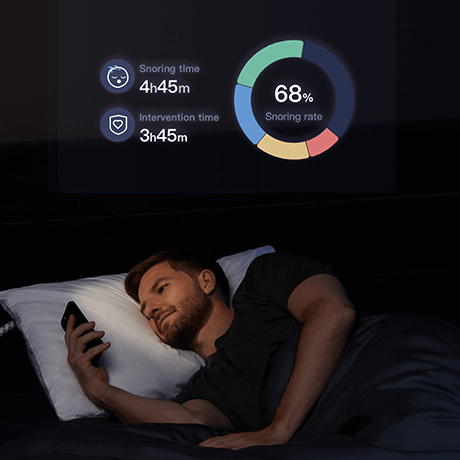

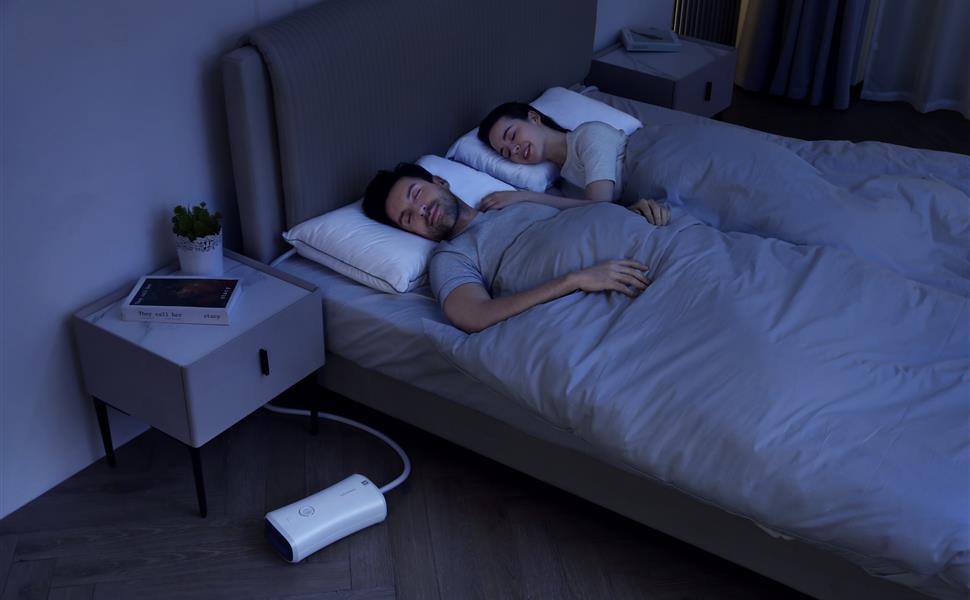
“Snoring pillow” describes several products that can look similar but work in very different ways. Some use a fixed contour, some elevate the upper body, and others respond during the night with small adjustments. Understanding those differences is more useful than treating every anti-snore pillow as the same solution.
This guide compares fixed, positional, wedge, and responsive smart pillows so you can match the mechanism to your sleep habits and set realistic expectations.
Start with the goal: support, position, or response
Before comparing materials or technology, decide what you want the pillow to change.
- **Support:** maintain a comfortable head-and-neck position.
- **Position:** make side sleeping or gentle elevation easier to sustain.
- **Response:** detect snoring-like sounds and make a subtle adjustment during sleep.
These goals can overlap, but no single design is automatically best for every sleeper.
Fixed supportive pillows
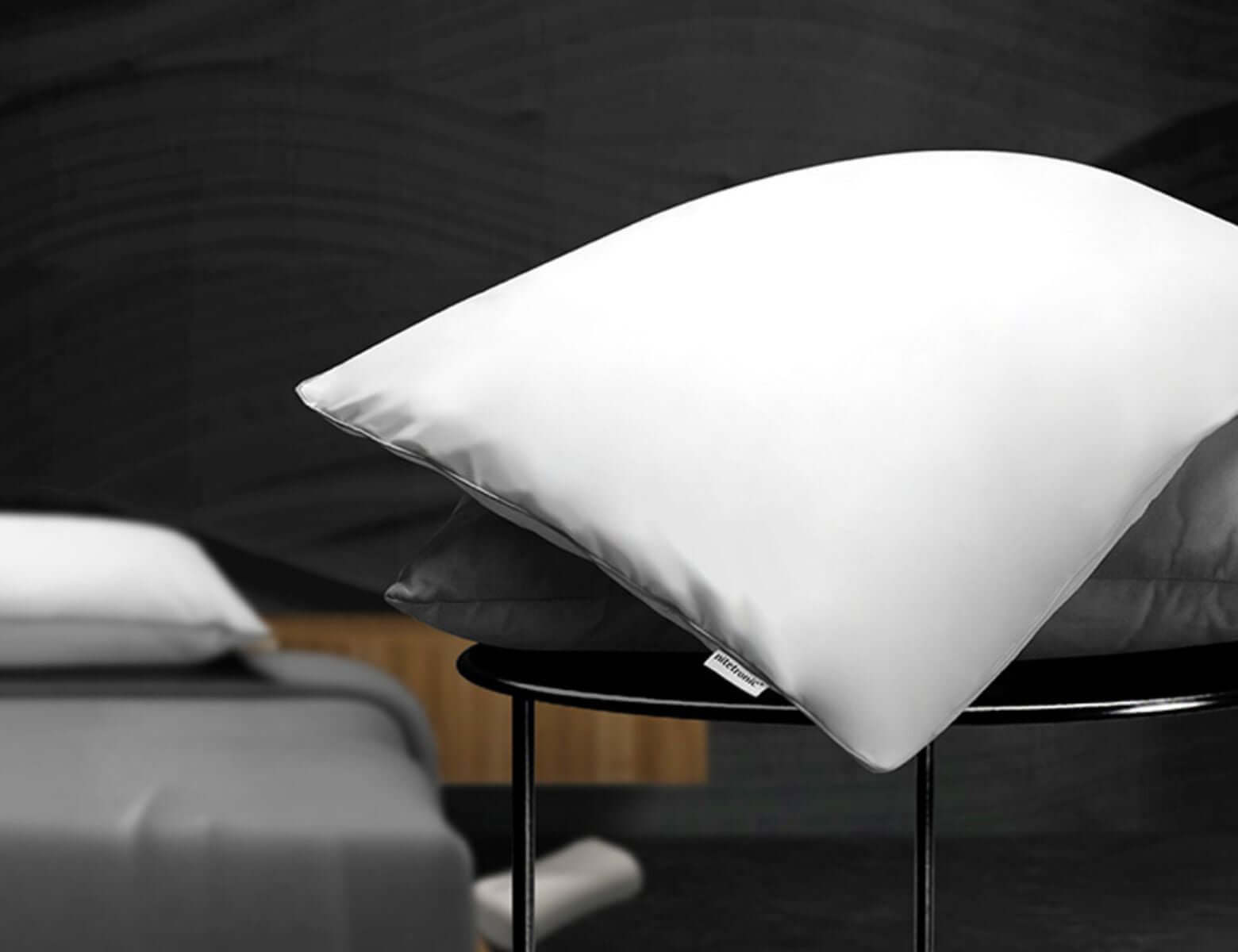
A fixed pillow relies on its height, firmness, and shape. Memory foam, latex, fiber, and other fills can all be used; the key question is whether the loft suits your body and mattress.
Potential advantages
- Simple setup with no power or electronics.
- Many choices of height, firmness, and material.
- Can improve comfort when the current pillow is clearly too high, low, soft, or firm.
Limitations
- The shape does not adapt when you change position.
- A contour that suits one body type may feel restrictive to another.
- More height is not necessarily better; excessive loft can push the chin toward the chest.
Fixed support is a reasonable starting point when poor alignment or discomfort is the main concern.
Positional pillows
Positional designs encourage a particular sleep posture, often side sleeping. This matters because some people snore more frequently or loudly while lying on their back.
Potential advantages
- May make a preferred side-sleeping posture easier to maintain.
- Does not require automatic movement or a connected device.
- Can be paired with simple sleep-position tracking.
Limitations
- It only helps if position is relevant to the sleeper’s snoring pattern.
- A restrictive shape may cause pressure or repeated awakenings.
- Quieter snoring does not confirm that possible sleep apnea is controlled.
If you are unsure whether position matters, compare several nights on your back and side while keeping other factors reasonably consistent.
Wedge and incline pillows
A wedge raises the upper torso rather than lifting only the head. Some sleepers prefer this broader incline for comfort, congestion, or reflux-related routines.
Potential advantages
- Distributes elevation across more of the upper body.
- Available in different angles and lengths.
- Can reduce the sharp neck bend created by stacking regular pillows.
Limitations
- May encourage sliding or create lower-back discomfort.
- Takes more room in the bed and can be difficult for side sleepers.
- Medical conditions may affect whether elevation is appropriate.
Choose an incline for comfort, not because a steeper angle sounds more powerful.
Responsive smart pillows
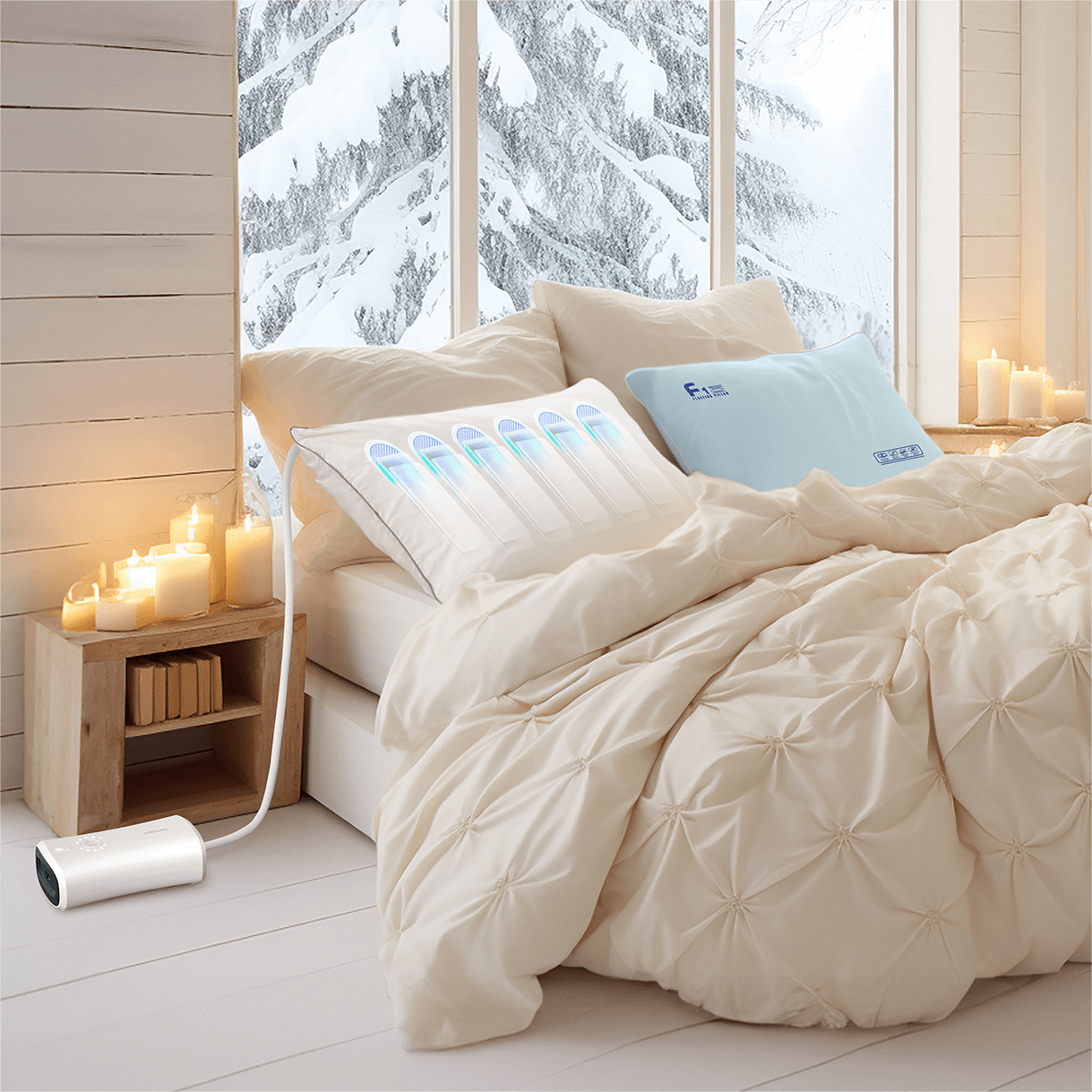
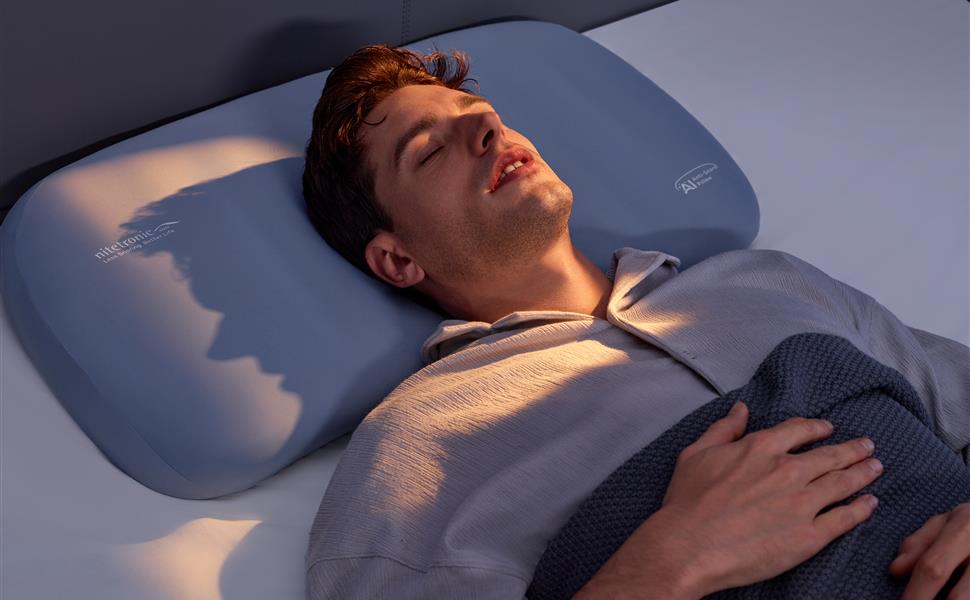
Responsive designs add sensors and controlled movement. Instead of relying on one permanent contour, they listen for snoring-like sound patterns and adjust selected air chambers or support zones.
The Nitetronic Z6 Smart Anti-Snore Pillow, for example, is designed to make gentle height changes intended to encourage a shift in head position without fully waking the sleeper.
Potential advantages
- Adjustment happens only when the system detects a relevant sound pattern.
- The sleeper does not need to remember to change position.
- Support can remain subtle rather than holding the head in one rigid contour.
Limitations
- Requires setup, power, and familiarity with the controls.
- Sensitivity, adjustment feel, and operating noise should be evaluated personally.
- It is a consumer sleep-support product, not a diagnostic device or sleep-apnea treatment.
Read how Nitetronic’s responsive positioning works to understand the mechanism before comparing it with a fixed design.
Side-by-side comparison
| Pillow type | Main method | Best question to ask | Main tradeoff |
| --- | --- | --- | --- |
| Fixed support | Loft and contour | Does this fit my body and mattress? | Does not adapt during the night |
| Positional | Encourages side sleeping | Is my snoring strongly position-related? | May feel restrictive |
| Wedge | Elevates the upper torso | Is gentle incline comfortable for me? | Can affect lower-body posture |
| Responsive smart | Detects sound and adjusts support | Do I want automatic positional support? | Requires setup and power |
How to choose without guessing
Check your current pillow first
Notice whether your neck feels bent, unsupported, or sore in the morning. A basic fit problem should be addressed before adding complexity.
Observe position patterns
Ask a partner whether snoring appears worse on your back, or use a simple overnight position log. Do not treat a phone recording or partner observation as a medical diagnosis.
Define acceptable comfort
A pillow that reduces noise but repeatedly wakes you, causes pain, or feels difficult to use is unlikely to become a sustainable routine.
Review practical details
Compare cover care, trial period, return policy, device noise, power requirements, adjustability, and the space available around your bed.
Test consistently
Use one setup for several nights rather than changing height and position every evening. Our 14-night pillow test guide offers a structured way to compare comfort and partner-observed snoring.
What no snoring pillow can establish
A pillow cannot determine whether you have obstructive sleep apnea, measure its severity, or prove that prescribed treatment is working. Reduced sound is not the same as confirmed healthy breathing.
Seek professional advice if snoring occurs with witnessed breathing pauses, choking or gasping, marked daytime sleepiness, frequent morning headaches, persistent concentration problems, or difficult-to-control high blood pressure.
If you use CPAP, a prescribed oral appliance, or another clinician-recommended treatment, do not stop or alter it because a different pillow seems to make sleep quieter.
Frequently asked questions
Is a smart snoring pillow better than a fixed pillow?
Not universally. A smart pillow offers responsive adjustment, while a fixed pillow offers simplicity. The better choice depends on your comfort, position pattern, and willingness to use a powered device.
Should side sleepers choose a contour pillow?
Some side sleepers benefit from a contour, but shoulder width, mattress firmness, and personal comfort determine the required height. A contour that is too high or rigid may create pressure.
Can I stack regular pillows instead of using a wedge?
Stacking can create an uneven bend concentrated at the neck. A wedge distributes elevation over a broader area, although it still needs to feel comfortable and appropriate for you.
Does quieter snoring mean sleep apnea is gone?
No. Sound alone cannot confirm whether apnea is present or controlled. Medical evaluation and prescribed monitoring are the appropriate tools for that question.
How long should I test a pillow?
Several nights are needed to separate normal variation from a repeatable pattern. A 7- to 14-night trial is more informative than a one-night verdict, provided the pillow remains comfortable.
The bottom line
Fixed, positional, wedge, and responsive smart pillows solve different problems. Choose by mechanism and fit: support for alignment, shape for position, incline for upper-body elevation, or responsive adjustment for automatic positional support. Keep expectations grounded, test consistently, and treat symptoms of possible sleep apnea as a medical question rather than a pillow-shopping problem.

Leave a comment
This site is protected by hCaptcha and the hCaptcha Privacy Policy and Terms of Service apply.