



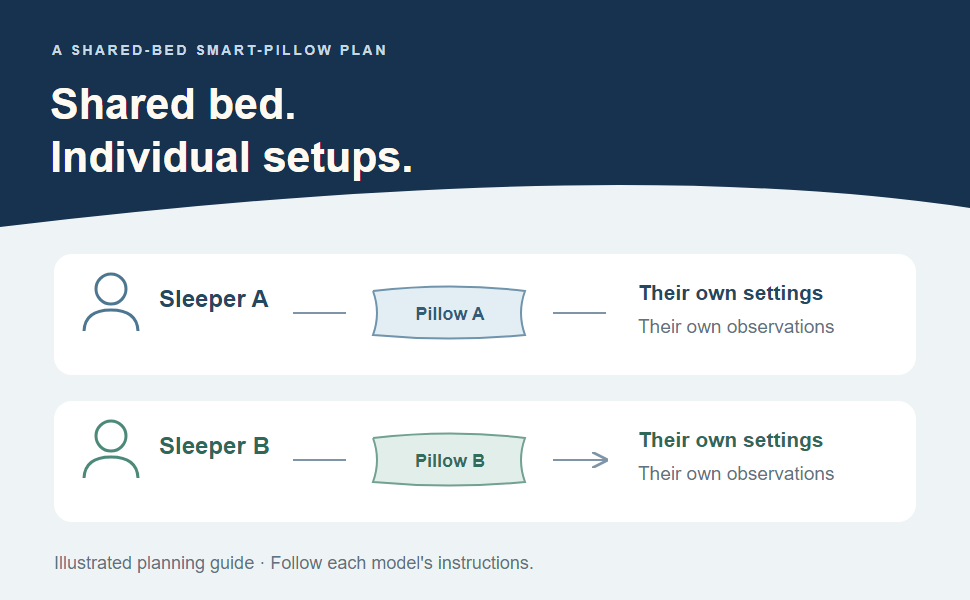
When both people in a shared bed snore, choosing a smart pillow raises a practical question: whose head, settings, and observations belong to the device? Start there, rather than assuming that a sound-responsive pillow works like a room-wide noise solution.
This guide focuses on assigning individual setups in a shared bed. For the wider purchase decision, see our anti-snore pillow guide for couples.
Sound detection and head adjustment are different things
A pillow may detect sound near the bed, but its air chambers adjust the pillow itself. That physical adjustment supports the person whose head is resting on it; it does not reposition a second sleeper on another pillow.
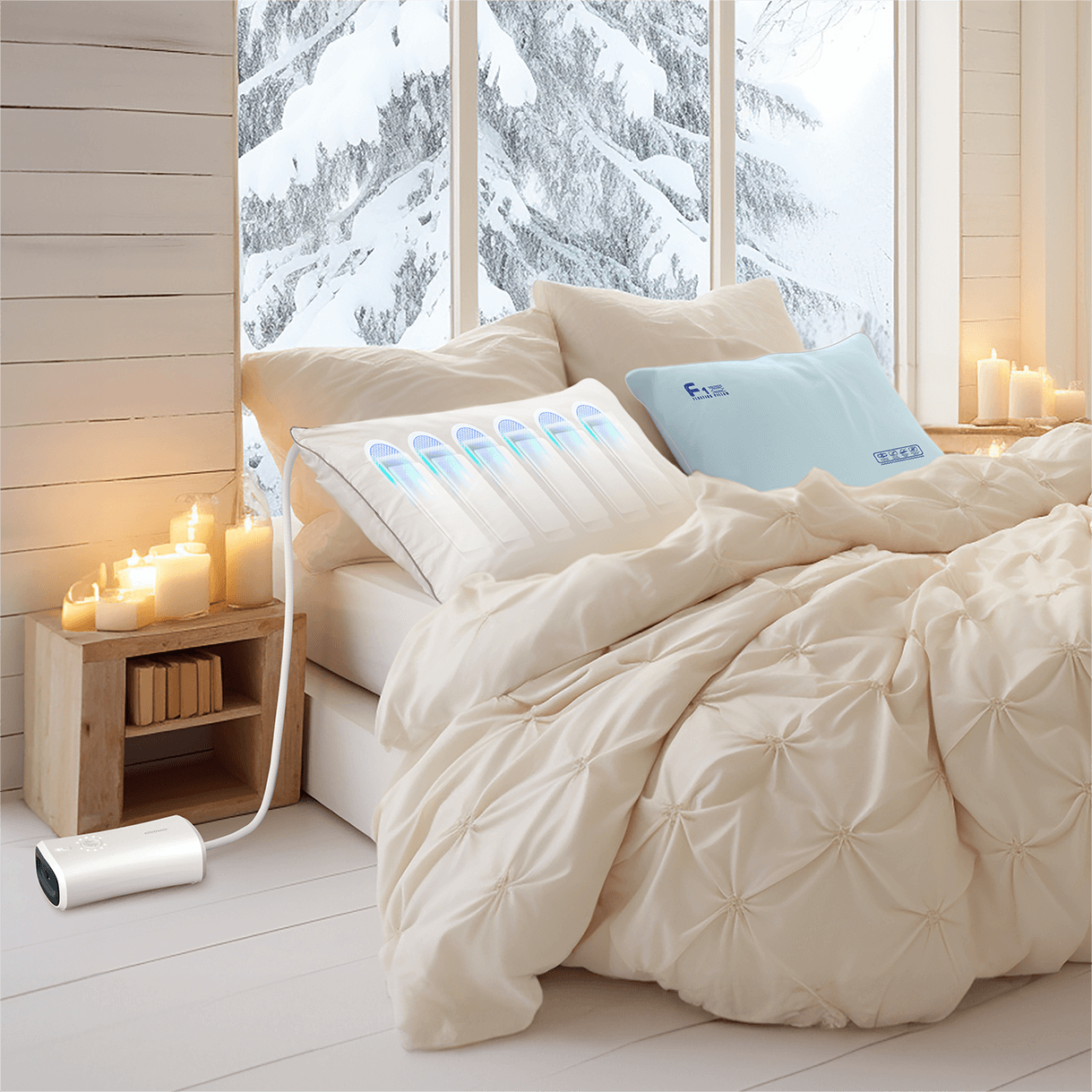
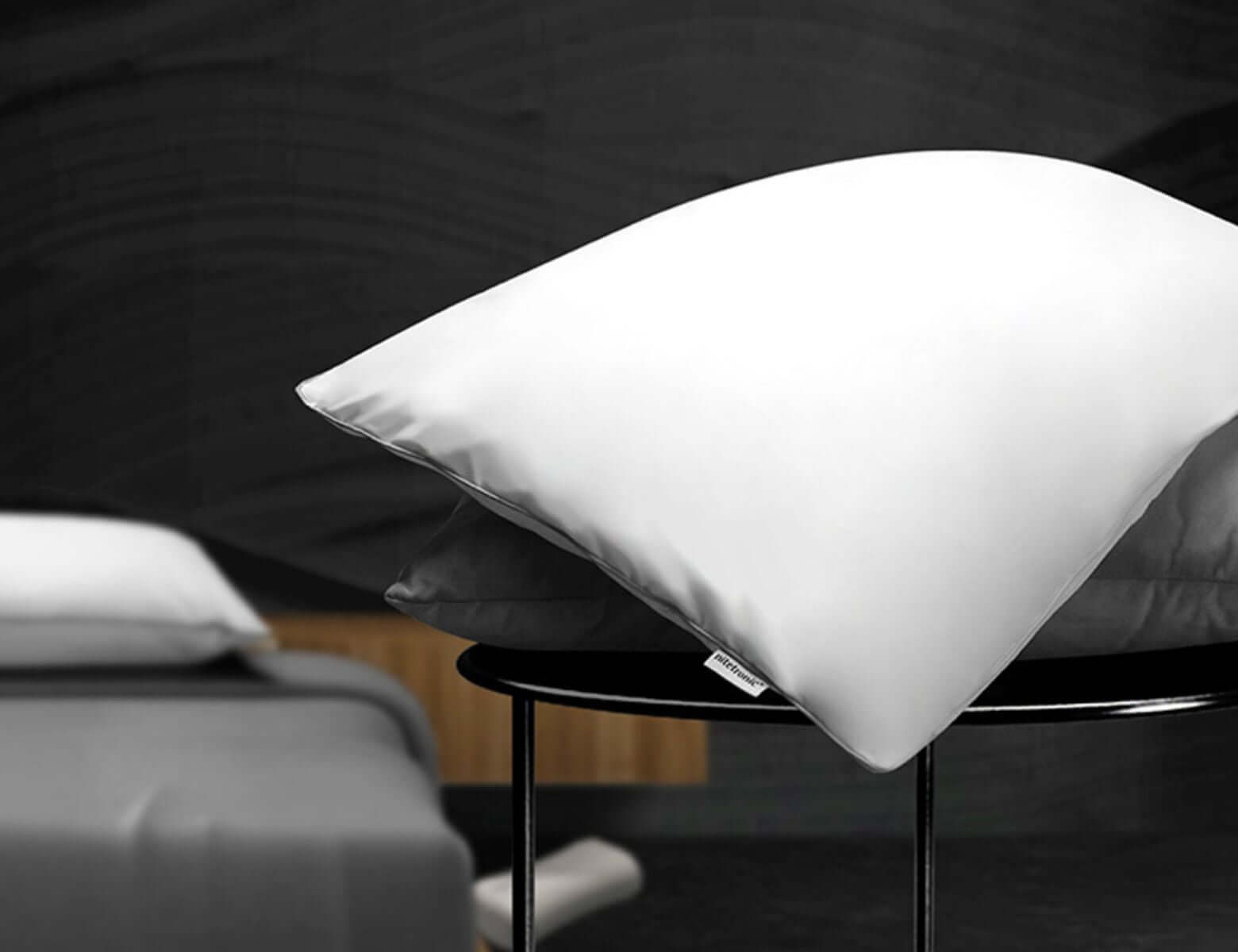
The Nitetronic A1 combines sound detection, head-position sensing, and integrated air chambers. The Nitetronic Z6 also uses sound and position sensing, with a separate controller. Those layouts differ, but neither should be interpreted as a whole-room system that guarantees a result for everyone nearby.
If both adults want responsive positioning at the same time, evaluate their individual pillow setups. Do not put two heads on one unit on the assumption that its detection area equals a two-person support area. Follow the model's intended use and support-position instructions.
Decide who will use a first unit
Trying one pillow first can be a reasonable way to assess fit and the practical routine. It is not a test of whether the same product will suit both people.
Agree on the intended sleeper before setup. Record that person's comfort and observations separately from the partner's experience. If the partner notices a quieter room, that does not show that their own snoring or breathing changed.
Do not select a person solely because their snoring sounds louder. If either sleeper has witnessed breathing pauses, gasping, or significant daytime sleepiness, prioritize professional assessment. A pillow purchase is not a substitute for evaluating those symptoms.
Check the space between neighboring pillows
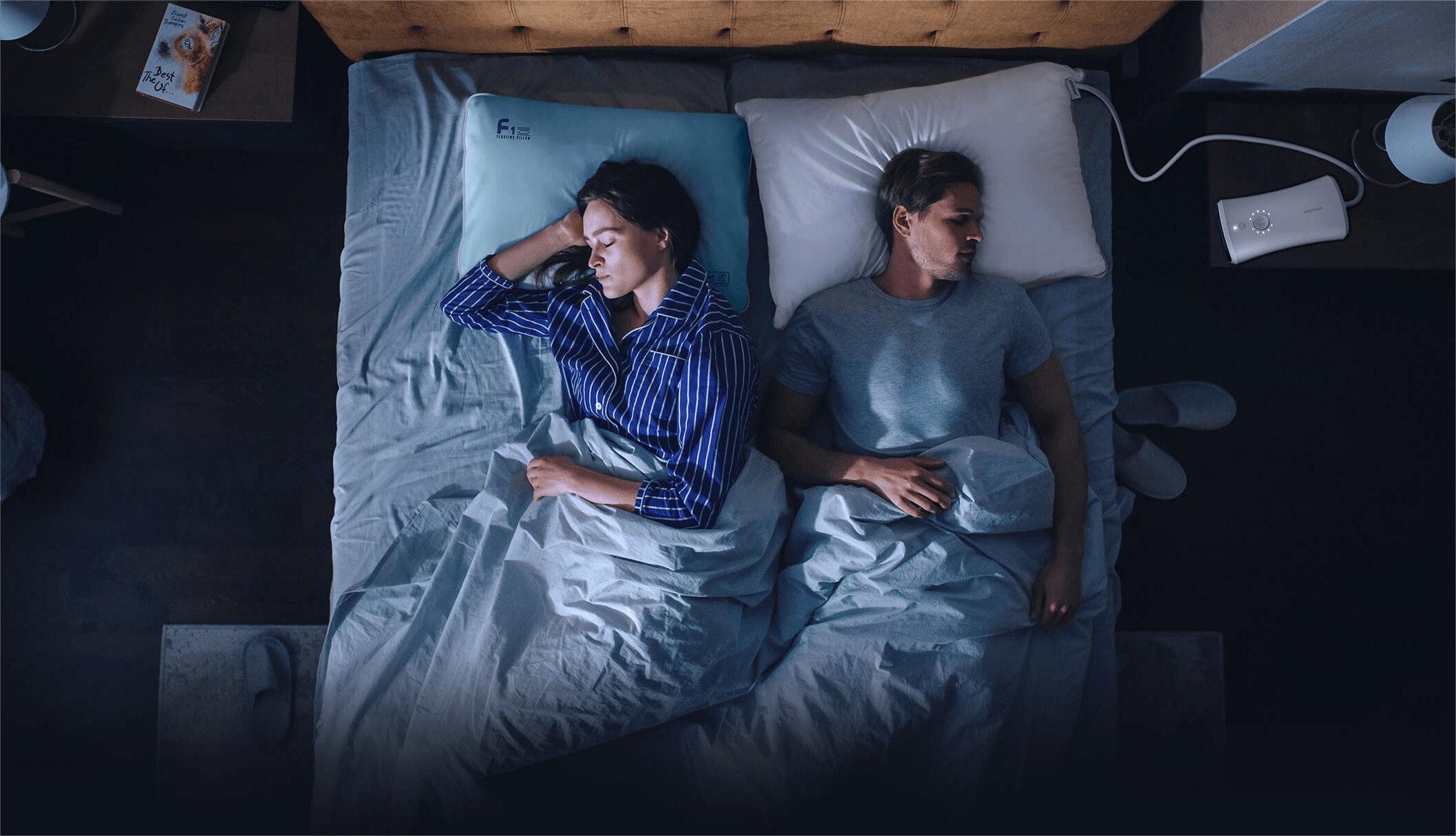
The current A1 product FAQ advises keeping at least 10 cm, approximately four inches, between A1 and adjacent pillows. Treat that as model-specific setup guidance, not proof that unrelated sound can never affect detection. Follow the instructions supplied with your model if they differ, and ask support if the bed cannot accommodate the layout.
Before using two devices, check that each person has room to rest naturally in their own support area. Bedding should not pull a pillow toward the center or compress the other unit. Do not solve a crowded layout by stacking powered pillows or placing extra layers over their sensing surfaces.
Map the device before changing an app setting
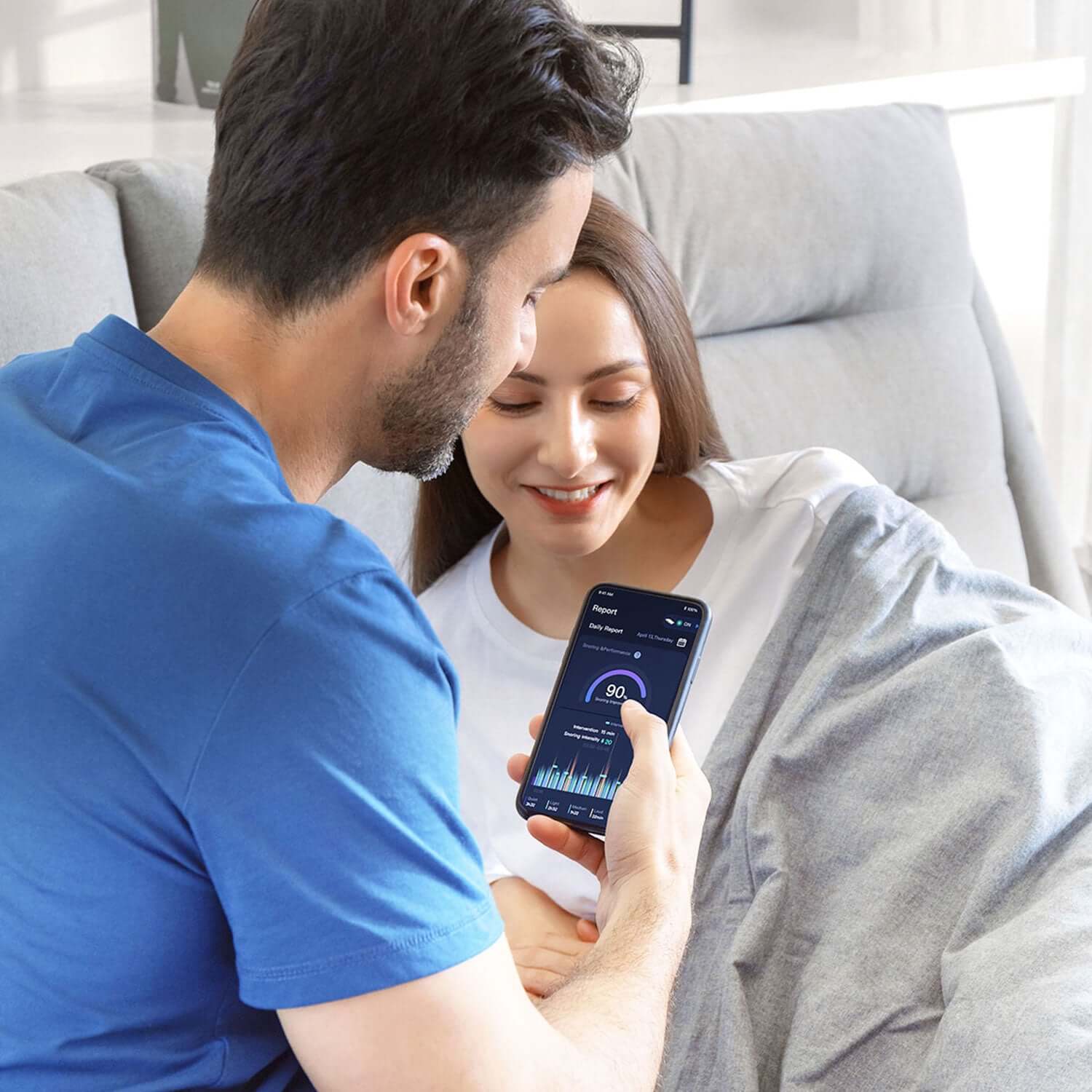
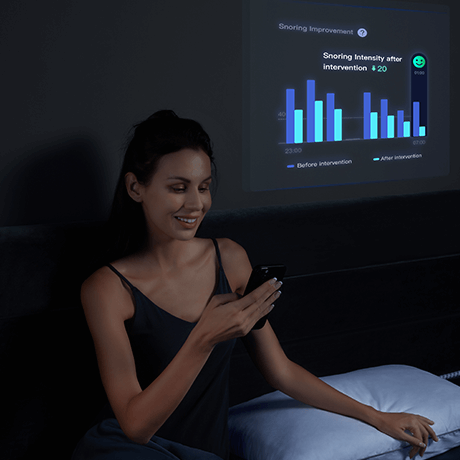
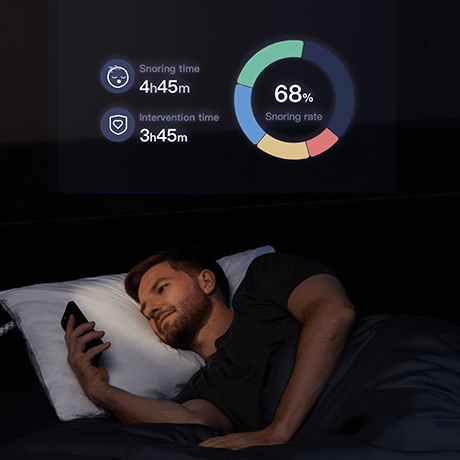
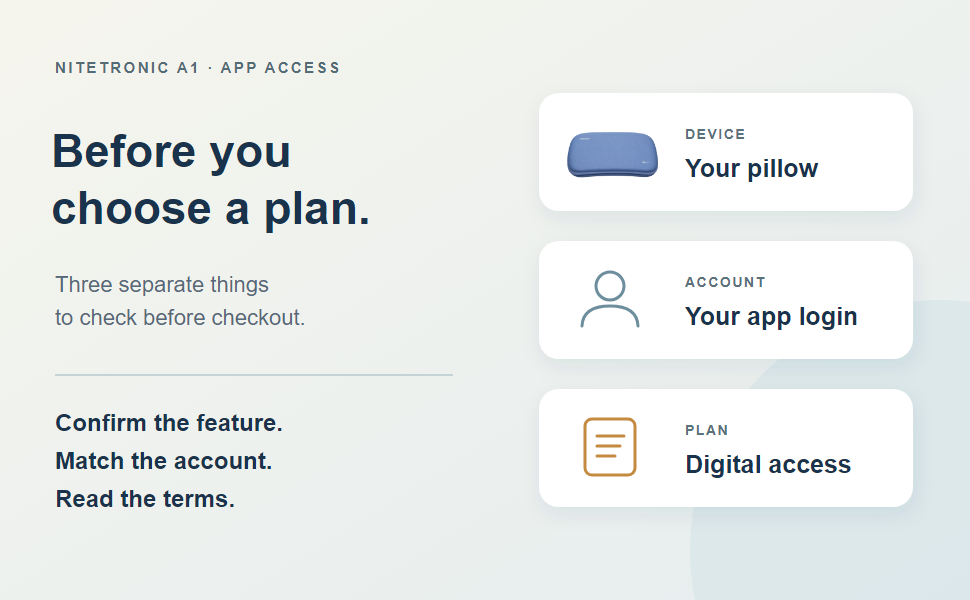
For a two-device household, keep a simple private note identifying which unit belongs to which sleeper. Follow the pairing instructions for the relevant app and confirm the selected device before changing a setting or reviewing a report.
Two pillows from one brand do not necessarily have identical controls or app procedures. On-device controls, pairing methods, account access, and available reports may differ by model and software version. Do not copy a setting path from one model to another without checking.
If the account-to-device association is unclear, ask support before resetting or rebinding anything. Discuss access to reports with the other sleeper rather than assuming that sharing a bed is consent to share personal sleep information.
Keep the bedside systems physically separate
With external-controller systems, identify which tube and controller belong together. Keep the approved components associated with their own pillow; do not improvise shared tubing, power equipment, or connections.
Plan both sides of the bed with the same care. Leave space for normal movement, keep cables out of walking paths, and avoid trapping connections in drawers or bed mechanisms. Our bedside setup checklist covers component placement in more detail.
Review two experiences, not one household score
Use separate notes for each sleeper: which pillow was used, the approved settings, comfort, awakenings, and any partner-observed sound. Do not combine two people's app scores into a single effectiveness percentage or compare different device metrics as if they were identical measurements.
If the sound source is uncertain, record that uncertainty. Neither an adjustment nor an app event proves who made a sound. Avoid raising both devices' sensitivity simply because somebody heard snoring; first clarify the observation and check the relevant instructions.
The aim is a manageable individual setup, not a guaranteed quiet room. Consumer reports cannot establish normal oxygen levels or exclude sleep apnea. Continue prescribed care unless a clinician advises otherwise. The NHLBI symptom guide explains warning signs worth discussing with a healthcare provider.
FAQ
Can one smart pillow adjust both sleepers' heads?
Its positioning action takes place in the pillow under the intended sleeper's head. Do not assume it also supports or repositions a person on a neighboring pillow.
Do we automatically need to buy two smart pillows?
No. Decide separately whether each person wants and can appropriately use that type of product. A first user's experience does not establish the other person's suitability or expected result.
Will two smart pillows never respond to the same sound?
Do not assume perfect sound separation. Follow model-specific spacing and setup instructions, and contact support if responses remain confusing. Consumer detection is not proof of a medical event.
Can both people use identical settings?
They may have different comfort preferences, positions, and model controls. Use each product's instructions rather than treating one person's settings as a prescription for the other.

Leave a comment
This site is protected by hCaptcha and the hCaptcha Privacy Policy and Terms of Service apply.