
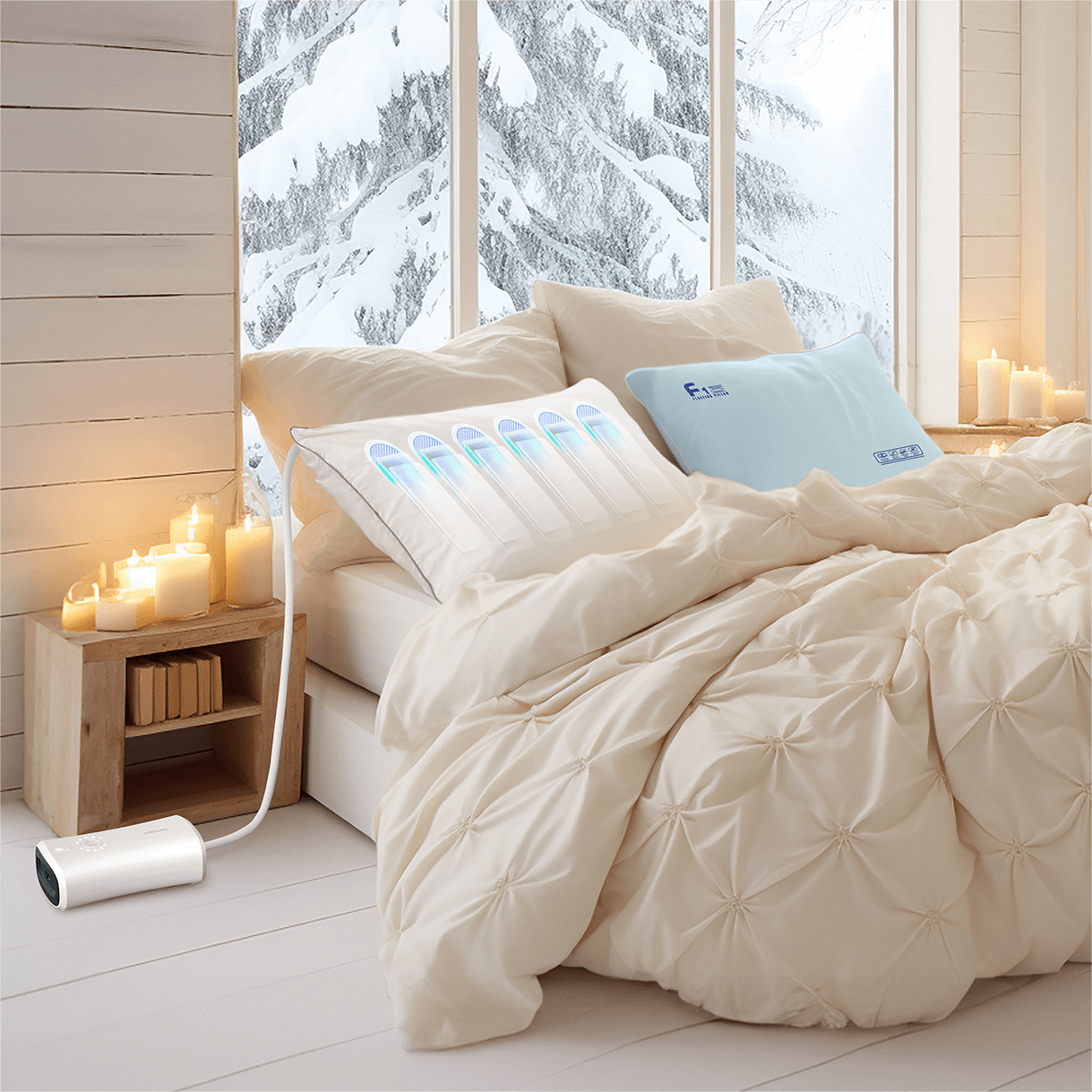
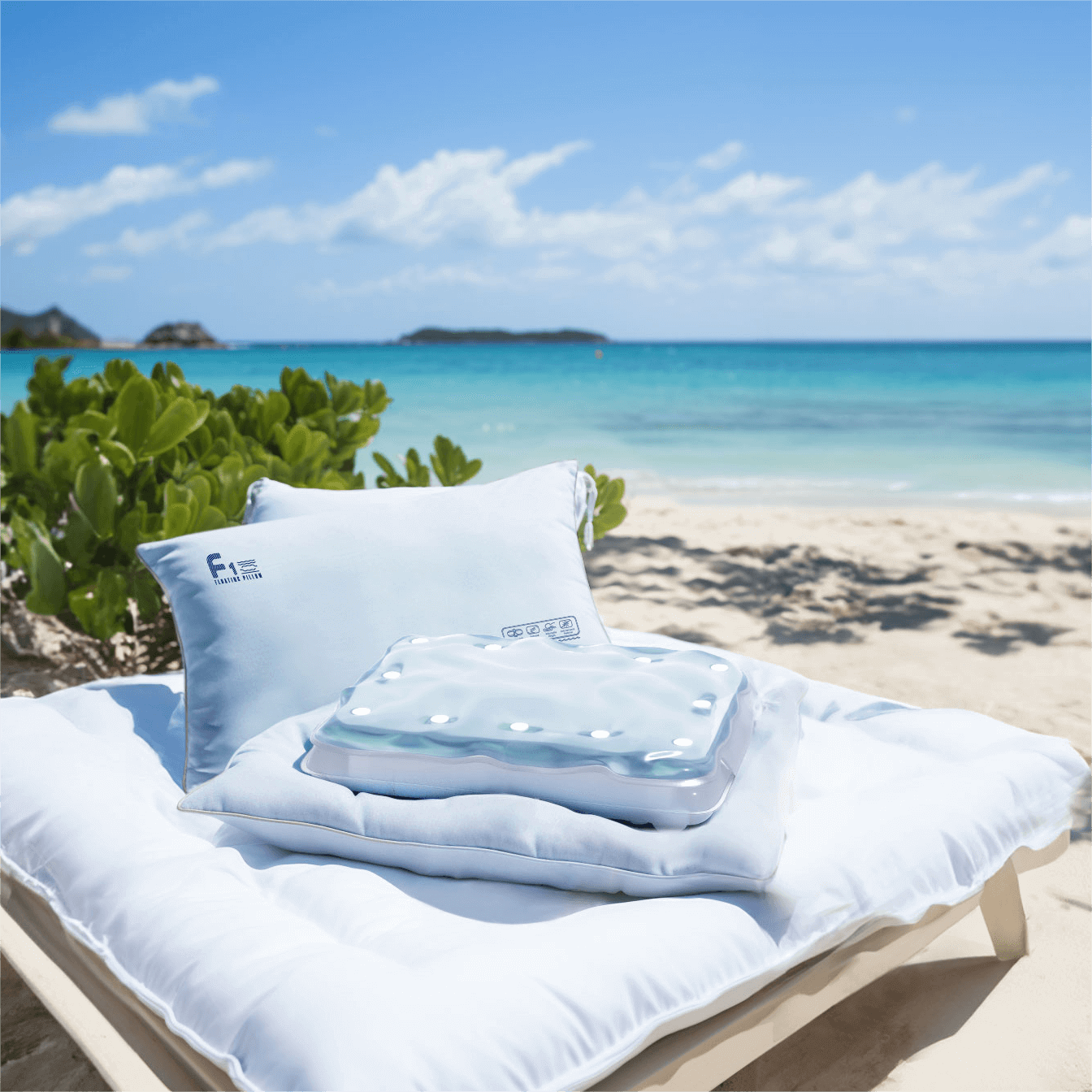


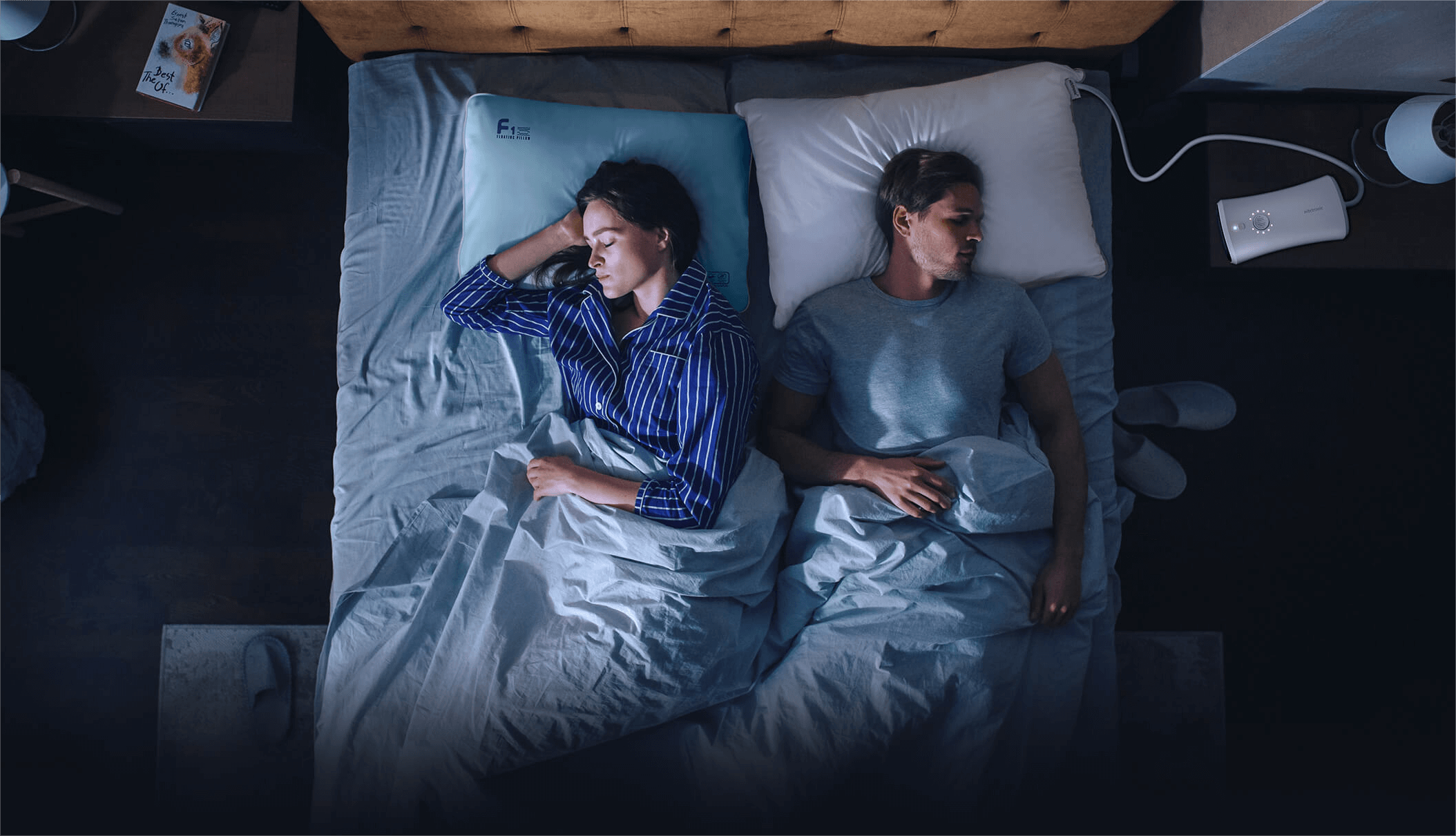
“Cooling pillow” can describe anything from a breathable cover to a powered temperature-control system. A water-cooled pillow is another category again: it uses water as part of the support and heat-management structure, but it may not actively refrigerate the surface.
Understanding the mechanism matters because two pillows marketed as “cooling” can feel very different through the night.
Passive cooling pillows
Passive designs do not use power. They rely on materials and construction to reduce heat buildup or help heat and moisture move away from the sleeper.
Common examples include:
- breathable woven covers;
- phase-change or cool-touch surface fabrics;
- perforated foam;
- gel-infused foam;
- fiber structures designed for airflow.
Passive cooling is simple and silent, but the initial cool sensation may fade as the pillow absorbs body heat and approaches room temperature.
Water-based pillows
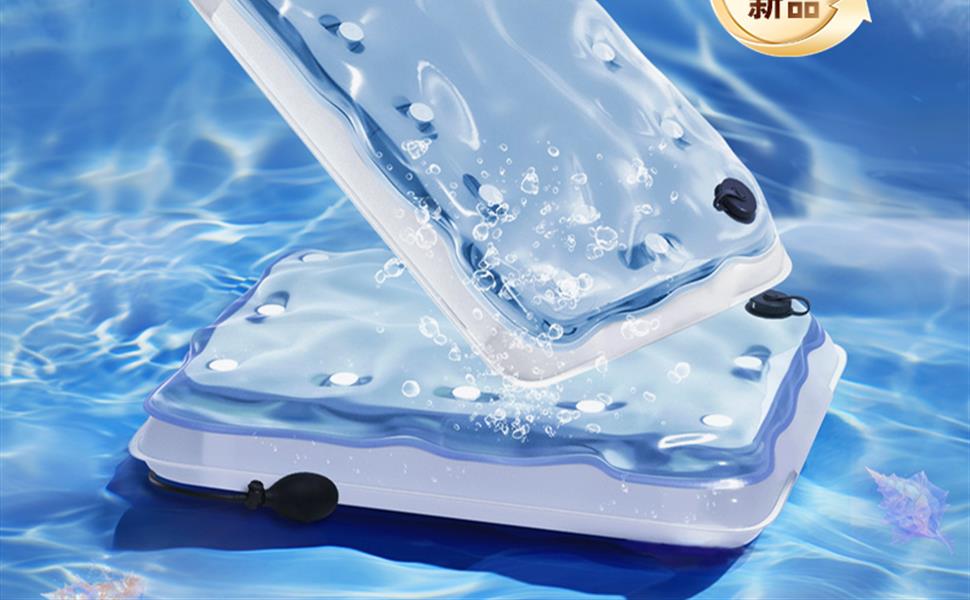
A water pillow contains a fillable water layer or chamber. Water can redistribute under the head and absorb heat without requiring a powered refrigeration system.
Changing the water volume may alter firmness or the way pressure is distributed. Some designs combine water with foam or fiber so the sleeper does not rest directly on a loose water pouch.
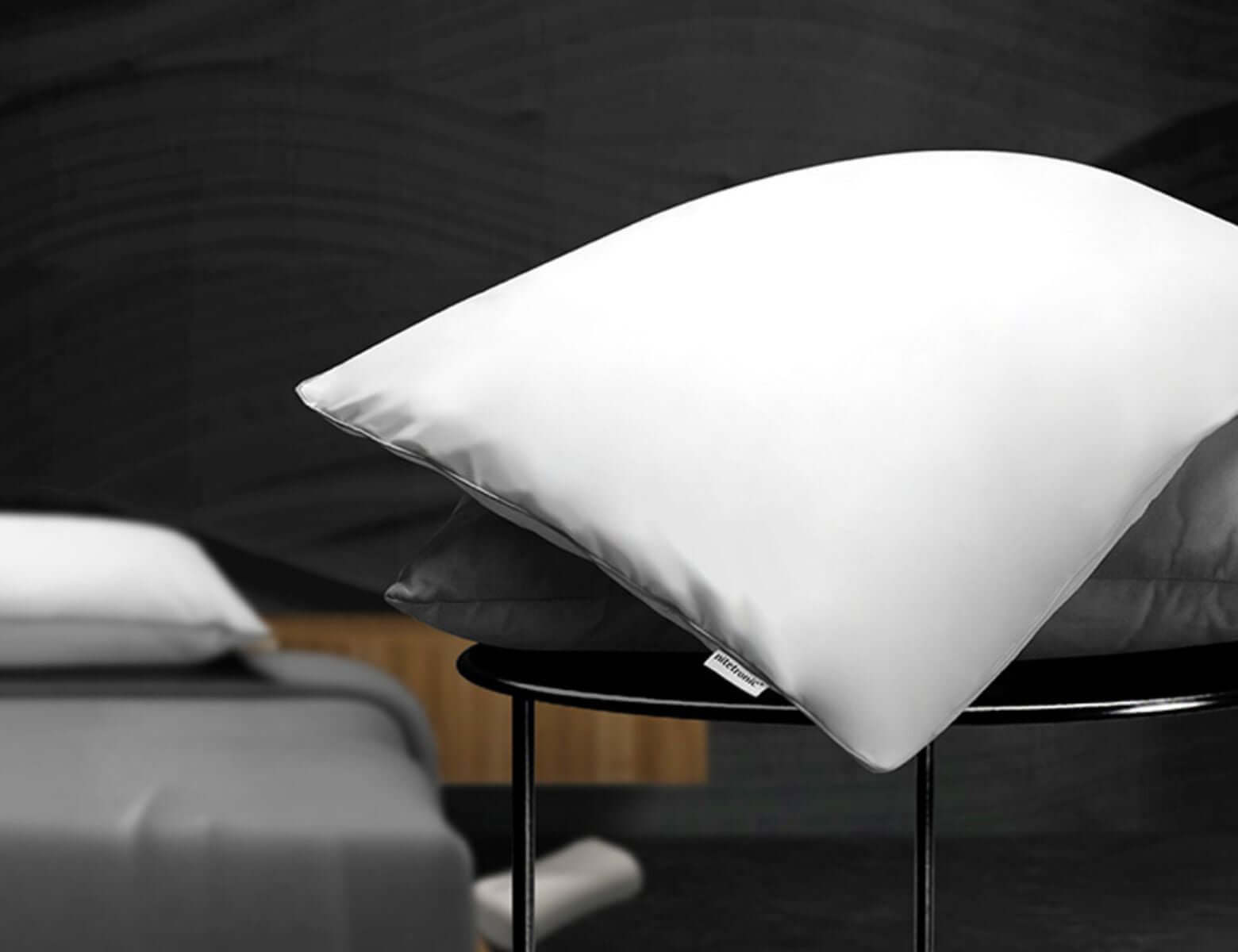
The Nitetronic F2 Floating Cooling Pillow combines a water-support layer, an air-adjustment layer, and foam. The water volume is used to tune the feel, while the integrated air pump fine-tunes height.
This is different from an electric chiller: the F2 does not continuously refrigerate water to a selected temperature.
Electric or active cooling pillows
Active cooling systems use power to move air, circulate temperature-controlled liquid, or transfer heat through a connected device. They can provide more continuous temperature control than passive materials, but they also introduce practical considerations:
- power use;
- device noise;
- hoses or cables;
- condensation management;
- cleaning and maintenance;
- available space beside the bed.
When comparing an electric cooling pillow, check whether the product actively lowers temperature or simply moves room-temperature air or water.
Side-by-side comparison
| Type | Cooling method | Power | Adjustability | Main tradeoff |
| --- | --- | --- | --- | --- |
| Cool-touch fabric | Surface material | No | Usually none | Cool sensation may be temporary |
| Breathable or perforated pillow | Airflow through materials | No | Depends on fill | Performance depends on room conditions |
| Water-based pillow | Water absorbs heat and redistributes support | Usually no active refrigeration | Water volume may adjust firmness | Heavier and requires filling |
| Active water/air system | Powered circulation or heat transfer | Yes | Often temperature or airflow | Noise, power, hoses, and maintenance |
Cooling sensation versus measured temperature control
A surface can feel cool at first contact because it draws heat from the skin quickly. That does not necessarily mean it will remain at a lower temperature all night.
Look for clear descriptions:
- **Cool-touch** usually refers to an initial surface sensation.
- **Breathable** generally means the construction allows more airflow or moisture movement.
- **Water cooling** may describe passive heat absorption through a water layer.
- **Active cooling** should identify a powered mechanism that continuously moves heat or controls temperature.
Avoid assuming that every “water-cooled pillow” contains a compressor, refrigeration unit, or selectable temperature setting.
Comfort and support still matter
A pillow that feels cool but creates an uncomfortable neck angle is unlikely to improve the overall sleep experience. Evaluate cooling together with:
- pillow height;
- firmness;
- head-and-neck support;
- sleeping position;
- movement noise;
- cover feel;
- ease of cleaning.
For side sleepers, the pillow generally needs enough height to fill the space between the shoulder and head. Back sleepers often prefer a lower profile. Stomach sleepers usually need minimal height, although individual fit varies.
How to compare cooling performance at home
Use a simple multi-night test rather than touching two pillows for a few seconds in a store.
- Keep room temperature and bedding reasonably consistent.
- Use each pillow for at least three nights.
- Record how the surface feels at bedtime, after the first awakening, and in the morning.
- Note sweating, dampness, or repeated pillow flipping.
- Track neck comfort and sleeping position.
- Record device noise or hose interference for active systems.
- Change only one major variable at a time.
The goal is not to produce a laboratory measurement. It is to learn whether the mechanism remains comfortable in your real sleep environment.
Filling and maintaining a water pillow
Follow the product manual rather than using a generic water amount. For the F2, Nitetronic recommends purified water to reduce the potential for algae growth.
General precautions include:
- fill only through the designated valve;
- keep the valve and cap clean;
- remove trapped air only as directed;
- check that the closure is secure before placing the pillow on the bed;
- keep sharp objects away from the water layer;
- never add cleaners, fragrance, or other liquids unless the manufacturer specifically approves them.
If a pillow includes an air chamber, avoid sharp folds or heavy compression that could stress the internal structure.
Who may prefer each type?
Passive cooling may suit you if:
- you want a simple, silent pillow;
- you dislike cables or bedside devices;
- mild heat buildup is the main issue;
- easy care is a priority.
A water-based pillow may suit you if:
- you want a fluid support feel;
- you value adjustable firmness through water volume;
- you want heat absorption without active refrigeration;
- you are comfortable filling and maintaining a water layer.
Active cooling may suit you if:
- you want stronger or more continuous temperature management;
- you accept powered equipment, noise, and maintenance;
- you have room for a controller or circulation unit.
Frequently asked questions
Does a water pillow stay cold all night?
Not necessarily. A passive water layer absorbs and redistributes heat but does not continuously refrigerate itself. Its feel depends on room temperature, bedding, water volume, and the sleeper.
Is a water pillow the same as a gel pillow?
No. A water pillow uses a fillable liquid chamber, while a gel pillow generally contains a fixed gel layer or gel-infused material.
Does an electric cooling pillow always use cold water?
No. Some powered systems move air, some circulate liquid, and others use a heat-transfer device. Check the exact mechanism and whether temperature is actively controlled.
Can I put tap water in a water pillow?
Follow the specific product instructions. Nitetronic recommends purified water for the F2 to help minimize algae growth.
Is a cooling pillow a medical treatment?
No. A cooling pillow is a comfort product and is not intended to diagnose or treat a medical sleep disorder.
The bottom line
Passive cooling pillows manage heat through materials, water-based pillows add a fluid layer for heat absorption and adjustable support, and active cooling systems use power to move heat or control temperature. Choose the mechanism that matches your comfort needs, maintenance preferences, and bedroom setup—not simply the strongest cooling label.

Leave a comment
This site is protected by hCaptcha and the hCaptcha Privacy Policy and Terms of Service apply.