

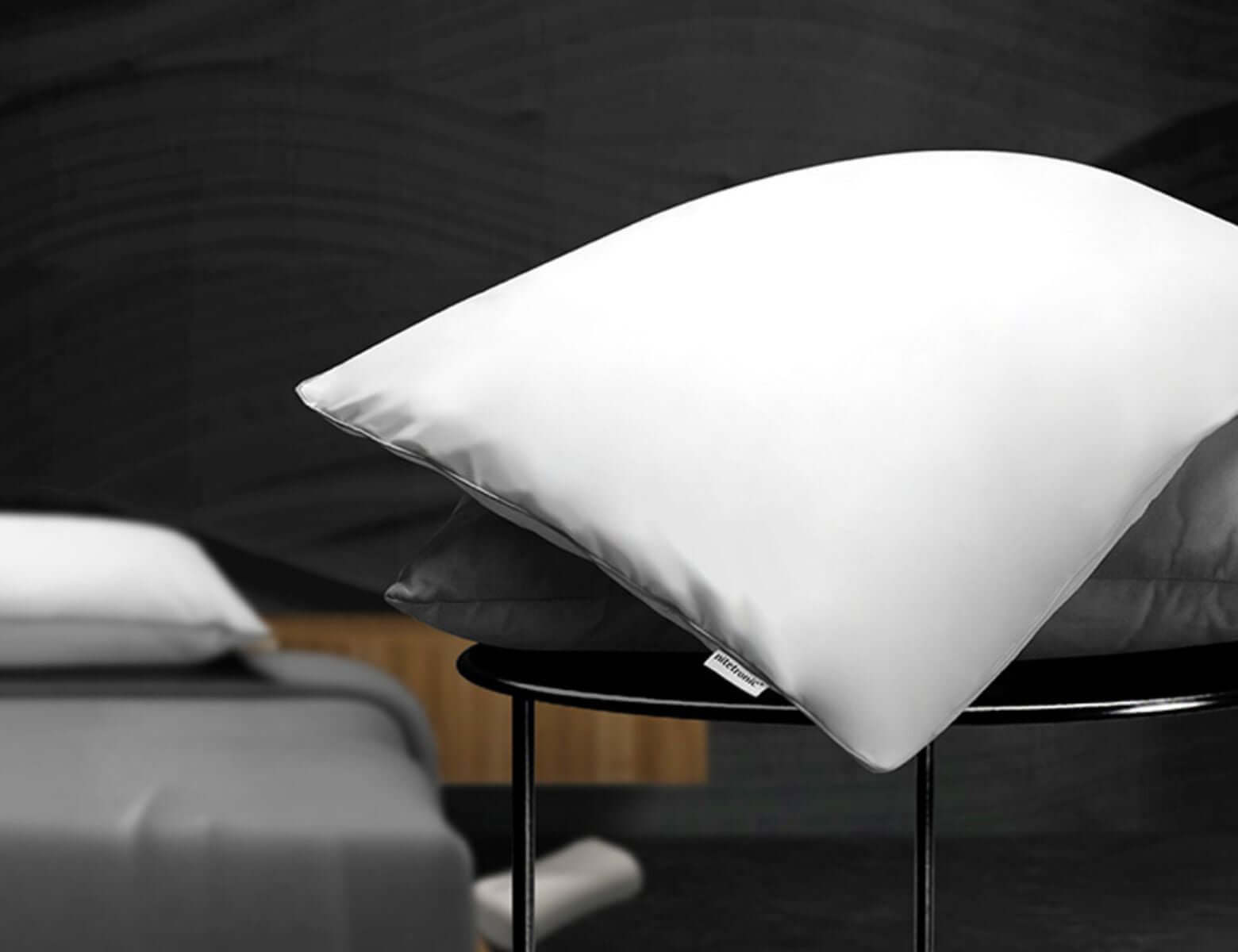


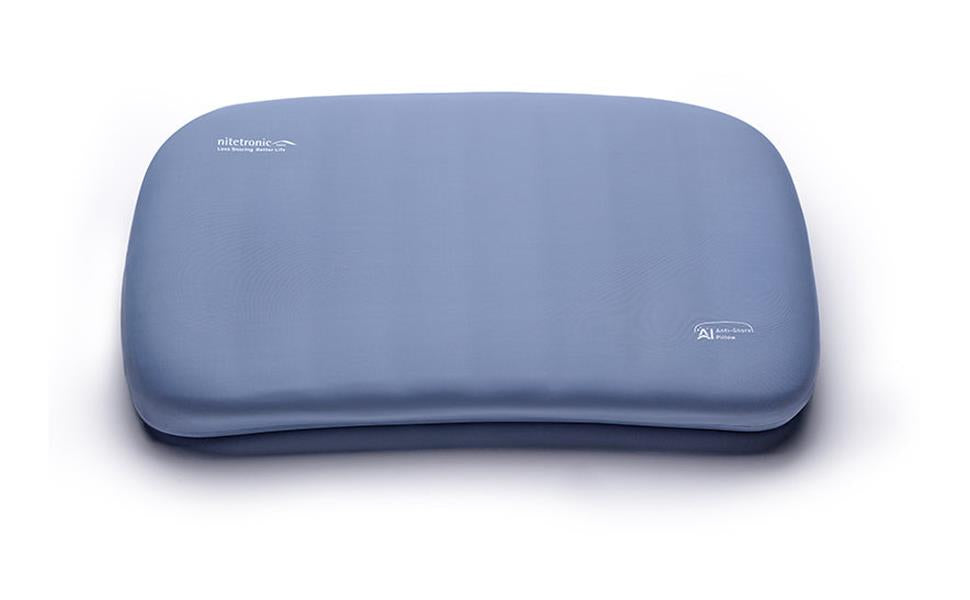
“Smart pillow” and “AI pillow” are useful shopping labels, but they are not standardized technical categories. One product may simply connect to an app, while another detects sound patterns and changes its shape during the night. The better question is not which label sounds more advanced—it is what the product senses, how it responds, and what evidence supports the results.
This guide explains the common components in plain language and shows what consumer sleep data can—and cannot—tell you.
What Usually Makes a Pillow “Smart”?
A smart pillow normally includes one or more electronic features beyond conventional foam or fiber fill. Depending on the model, those features may include:
- sound or motion sensing;
- sleep or snoring trend tracking;
- app connectivity;
- built-in speakers, vibration, heating or cooling;
- an adjustable support system.
Connectivity alone does not mean a pillow understands your sleep. Some products collect information but do not respond automatically. Others form a closed loop: they detect an event, apply an adjustment, and record what happened.
What Does “AI Pillow” Mean?
In this category, AI generally refers to software that classifies patterns or adapts a response using sensor data. For example, an algorithm might distinguish likely snoring sounds from background noise, then trigger a small change in pillow height.
The term “AI” is not proof of medical accuracy or better comfort. Useful questions include: What inputs does the algorithm use? Is the response adjustable? Can it work without a phone nearby? Has its performance been independently validated? A transparent product description matters more than the label.
Four Parts of a Sensor-Based Pillow System
1. Sound sensing
Microphones or compact acoustic sensors can monitor sound patterns near the sleeper. Software may analyze volume, duration, frequency, and repetition to identify sounds that resemble snoring.
The bedroom is not a laboratory. A partner’s snoring, a fan, traffic, television, or pets can affect detection. Placement also matters. That is why an app’s snoring score should be treated as a trend for comparison—not a clinical measurement.
2. Pressure, position, or motion detection
Some systems use pressure or motion inputs to estimate whether a head is on the pillow or whether its position has changed. This information can help prevent an adjustment from occurring at the wrong time and can support basic position trends.
These sensors do not directly measure the airway. They also cannot explain why a person snores. Fit, mattress support, sleeping position, congestion, alcohol, medications, and health conditions can all influence the night’s results.
3. The physical response
Detection becomes actionable only when the pillow has a response mechanism. Depending on the design, that could be vibration or an adjustable air system. A gentle height change may encourage a small head-position shift without fully waking the sleeper.
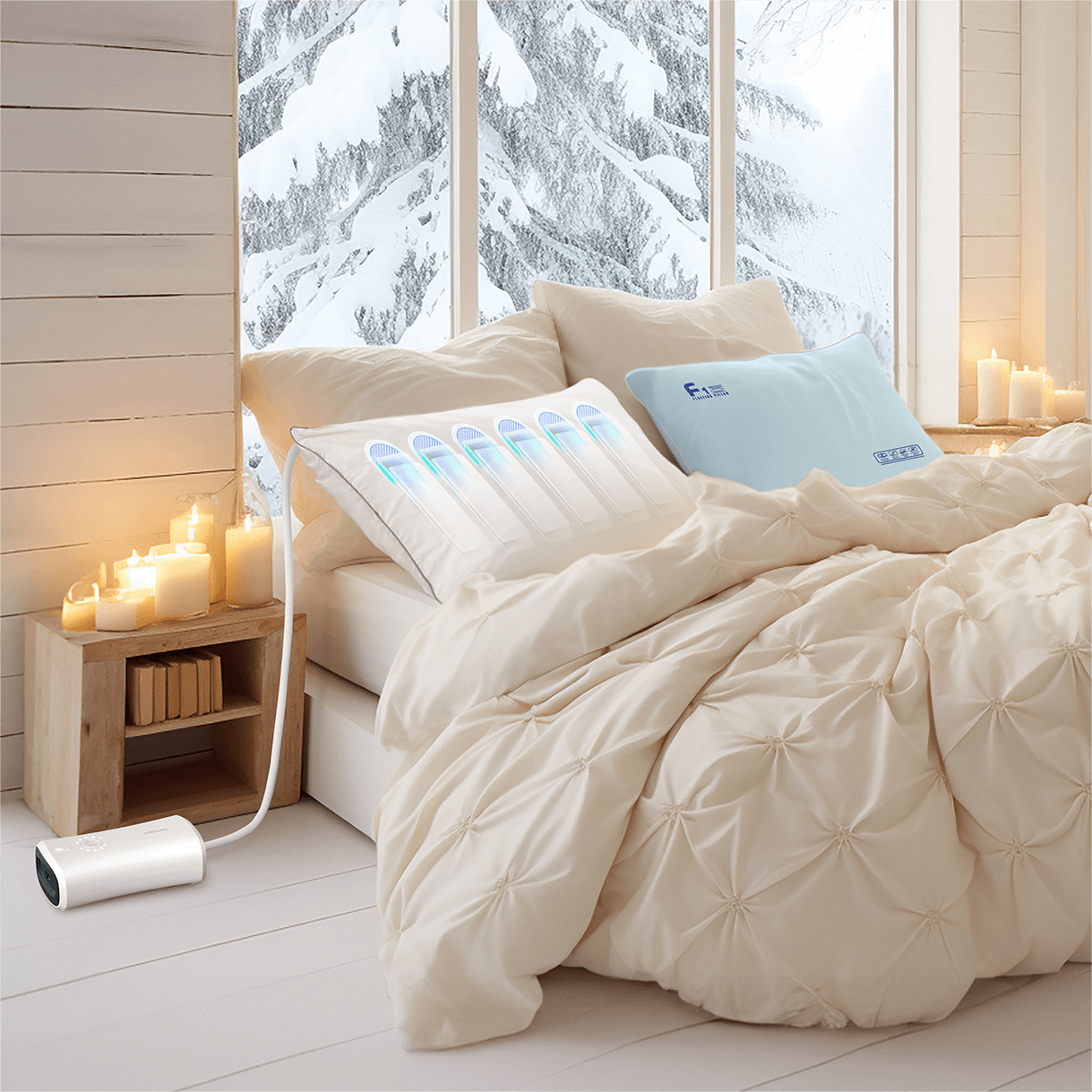
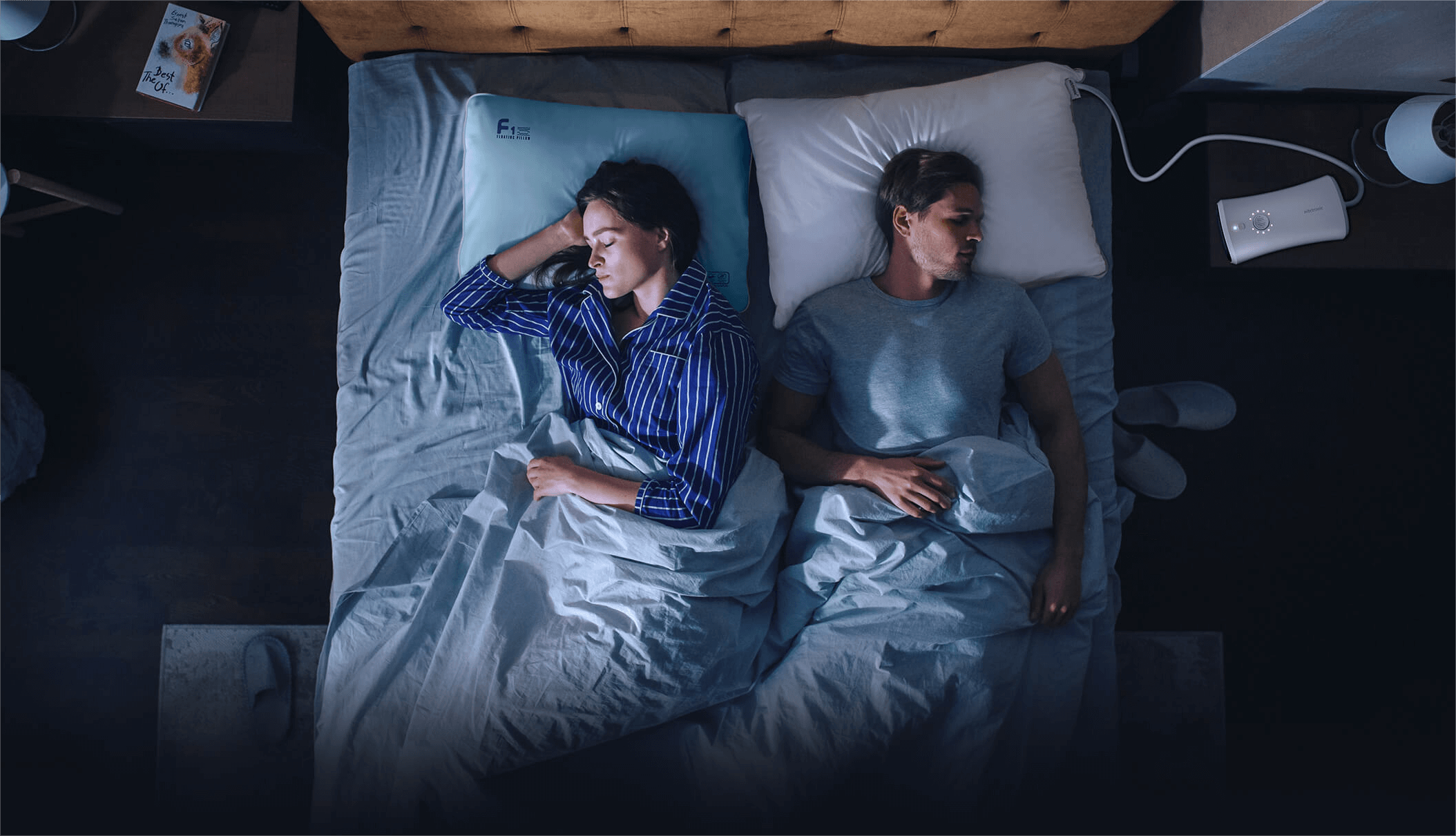
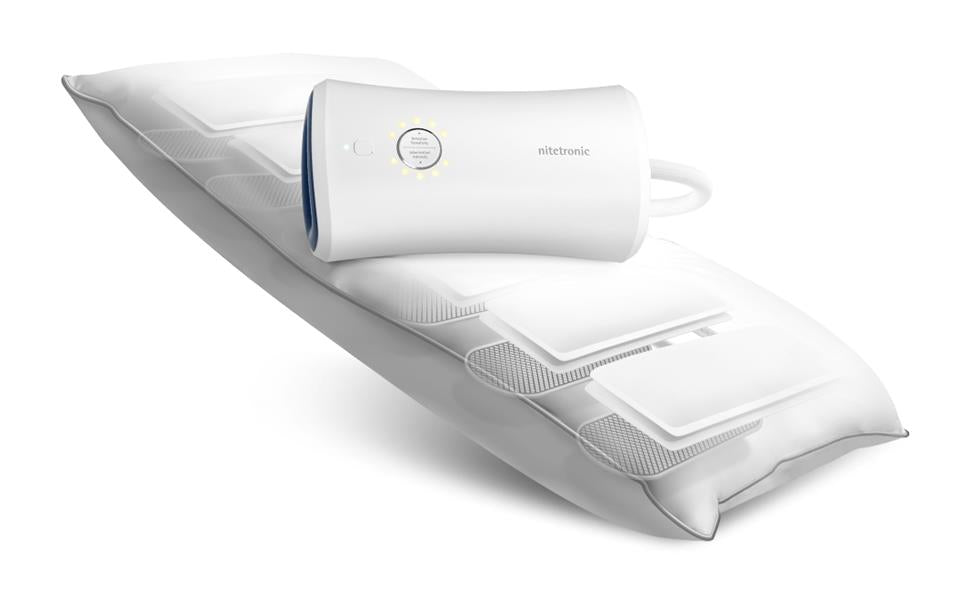
For example, the Nitetronic A1 AI Anti-Snore Pillow uses six independently controlled air sections and an integrated pump. Its sensor-and-control system can detect sound patterns and adjust support. This is a consumer comfort feature; individual experiences vary.
The response should feel subtle, provide manual controls, and return to a comfortable position. Noise, speed, maximum lift, and the firmness of the underlying foam can matter as much as the software.
4. The app and recorded trends
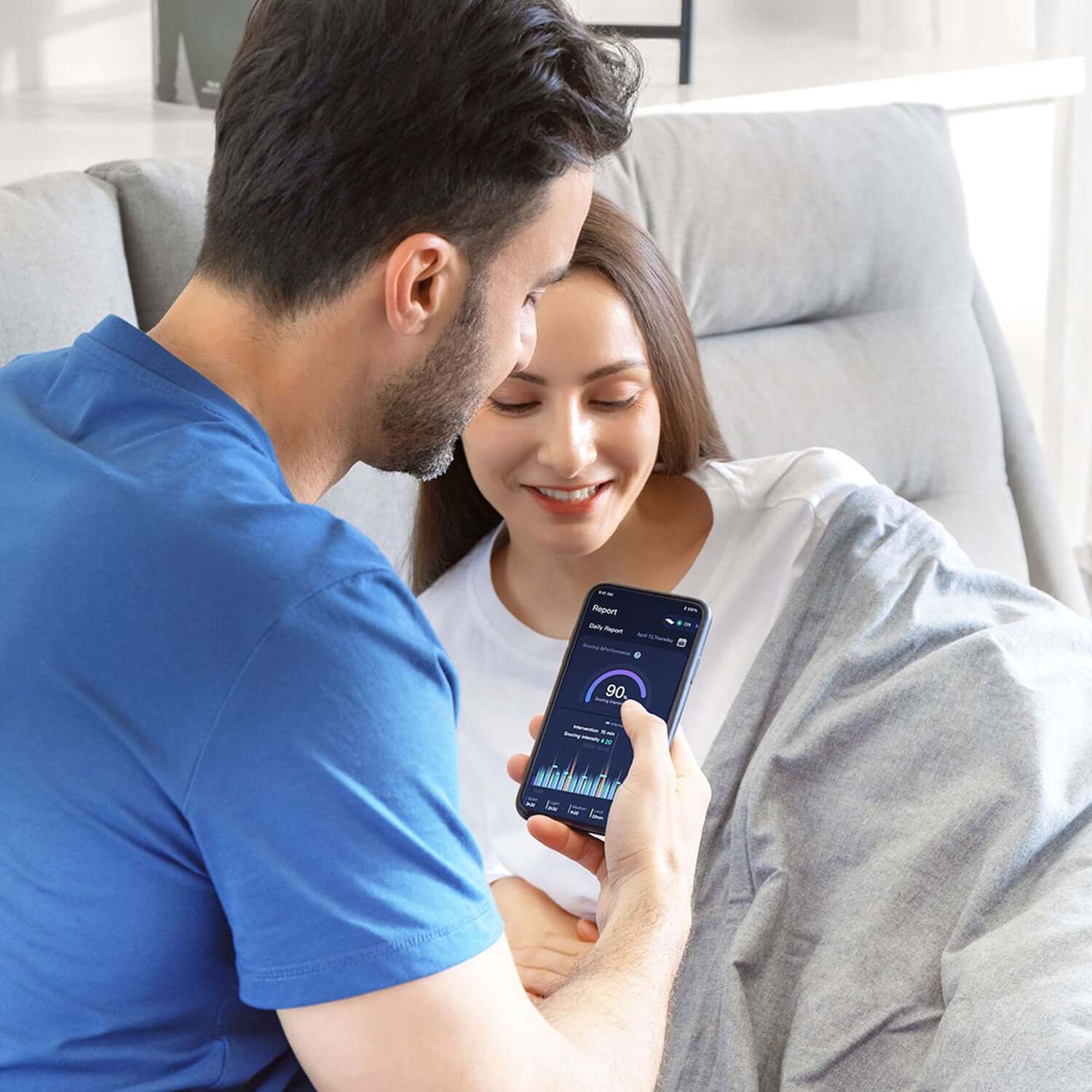
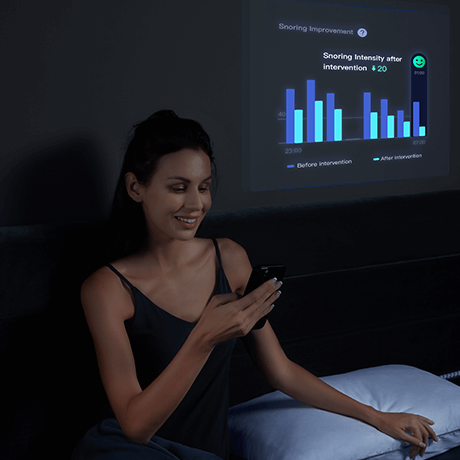
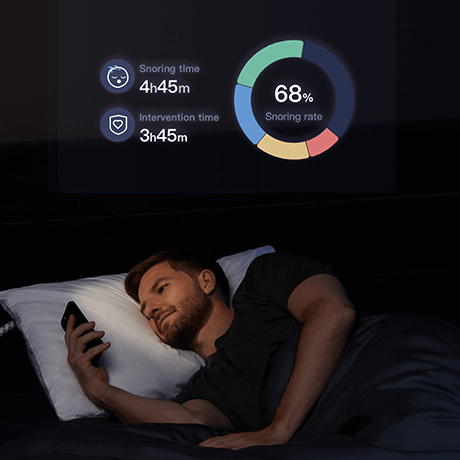
An app can turn raw events into understandable nightly summaries. Useful views may include the timing and duration of detected sounds, comparative trends, and device activity. The Nitetronic Pillow App overview explains how the companion experience presents sleep-related information.
Look for clear labels and reasonable privacy controls. Ask where recordings or derived data are processed, whether the product stores raw audio, how long data is retained, and whether you can delete or export it. A larger number of metrics is not automatically more meaningful.
The Closed Loop: Sense, Classify, Respond, Record
An adaptive pillow typically follows four steps:
- A sensor detects a possible sound or position event.
- Software classifies the signal according to its rules or model.
- The pillow applies a programmed response.
- The app records the event so the user can review a trend.
Each step introduces uncertainty. A false detection may trigger an unnecessary adjustment; a missed event produces no response. Bedroom noise and changing sleep positions make real-world performance more difficult than a controlled demonstration. When comparing products, prioritize adjustable sensitivity, manual override, quiet operation, and a practical return policy.
For a visual explanation of Nitetronic’s adjustment approach, see How It Works.
What Consumer Sleep Data Cannot Diagnose
Snoring can be harmless, but it can also occur alongside obstructive sleep apnea or another health issue. A consumer pillow or app cannot determine the cause from sound patterns alone. The American Academy of Sleep Medicine’s position statement says consumer sleep technology without appropriate validation and regulatory clearance should not be used to diagnose or treat sleep disorders. Its data may, however, help support a conversation with a healthcare professional.
Seek medical advice if snoring is accompanied by witnessed breathing pauses, gasping, choking, chest pain, severe daytime sleepiness, morning headaches, or safety problems caused by fatigue. Do not use a pillow as a replacement for prescribed CPAP or other treatment.
How to Compare AI and Smart Pillows
Before buying, check the following:
- Purpose: Is the product mainly tracking, entertainment, comfort adjustment, or sound response?
- Inputs: Does it use sound, pressure, motion, or a combination?
- Response: What physically changes, and can the intensity be adjusted?
- Comfort: Are the size, height, firmness, materials, and sleep-position fit appropriate for you?
- Noise: How audible are the pump, motor, or vibration in a quiet room?
- App dependency: Does the core function work if the phone is offline or the app is unavailable?
- Privacy: Are audio handling, retention, deletion, and account controls explained?
- Evidence: Are performance claims defined, test conditions disclosed, and limitations clear?
- Ownership costs: Check subscriptions, replacement parts, warranty, and returns.
If your priority is snoring-related adjustment, compare the models in the anti-snore pillow collection. For broader selection criteria, read the anti-snore pillow buying guide.
The Bottom Line
A smart pillow may collect data, connect to an app, or add electronic comfort features. An AI pillow usually goes a step further by classifying sensor patterns or adapting its response. Neither term guarantees accuracy, comfort, or a health outcome.
Choose by the complete system: the sensors, decision logic, physical response, app transparency, comfort, and evidence. Use the data to notice patterns and ask better questions—not to self-diagnose.
Frequently Asked Questions
Is an AI pillow automatically better than a smart pillow?
No. “AI” describes an approach to processing or adapting, not overall quality. Comfort, sensor reliability, response controls, privacy, and evidence are more useful comparison points.
Can an AI pillow diagnose sleep apnea?
No consumer pillow should be relied on to diagnose sleep apnea. Diagnosis requires evaluation by a qualified healthcare professional and, when appropriate, validated sleep testing.
Does a smart pillow need an app to work?
It depends on the model. Some need an app for setup and reports but retain core functions without a continuous phone connection. Confirm this before purchase.
Can room noise affect snoring detection?
Yes. A partner, fan, television, traffic, or pets can influence acoustic detection. Review multi-night trends rather than treating one night as definitive.
Can an adjustable pillow replace CPAP?
No. Never stop or change prescribed therapy based on a pillow or app result. Discuss comfort problems or treatment concerns with your healthcare provider.

Leave a comment
This site is protected by hCaptcha and the hCaptcha Privacy Policy and Terms of Service apply.