







title: "Anti-Snore Pillow for Side Sleepers: How to Choose the Right Height"
slug: anti-snore-pillow-for-side-sleepers-right-height
meta_title: "Anti-Snore Pillow for Side Sleepers: Fit Guide"
meta_description: "Learn how side sleepers can compare anti-snore pillows by loft, shoulder width, mattress firmness, neck support, adjustability and realistic expectations."
summary: "A practical side-sleeper guide to pillow height, mattress sink, neck position, adjustability and safe expectations when comparing anti-snore pillows."
---
# Anti-Snore Pillow for Side Sleepers: How to Choose the Right Height
Side sleeping is often discussed in conversations about snoring, but simply buying a pillow labeled “for side sleepers” does not guarantee a good fit—or a quieter night. Shoulder width, mattress firmness, pillow compression and neck position all change the amount of support a person needs.
The best anti-snore pillow for a side sleeper is therefore not automatically the tallest, firmest or most technologically advanced option. It is a pillow that fills the space between the head and mattress without pushing the neck sharply upward or allowing it to drop toward the bed.
This guide explains how to assess that fit, what adjustable and smart pillows can add, and when snoring needs more than a change of pillow.
Why pillow height matters more for side sleepers
When you lie on your side, your shoulder creates a larger gap between your head and the mattress than it does when you lie on your back. A pillow that is too low can allow the head to tilt downward. One that is too high can push it in the opposite direction. Either situation may feel uncomfortable because the neck is held away from a neutral, relaxed position.
The required pillow height—often called loft—is not determined by sleep position alone. It also depends on:
- shoulder width;
- head and neck proportions;
- how deeply the shoulder sinks into the mattress;
- how much the pillow compresses under the head;
- whether the sleeper remains on one side or changes position; and
- personal comfort and existing sensitivities.
This is why two side sleepers of the same height may prefer very different pillows.
Start with your mattress, not the pillow label
A firm mattress usually allows the shoulder to sink less, leaving a wider space for the pillow to fill. A softer mattress may let the shoulder settle deeper, reducing the required loft. Choosing a pillow without considering the mattress can turn an otherwise reasonable design into a poor fit.
Lie in your normal side-sleeping position and ask another person to look at the line from the middle of your forehead through your nose, chin and chest. The head should not appear sharply tilted toward or away from the mattress. A photograph taken from behind can also help reveal whether the head and neck look approximately level with the upper spine.
This is a comfort check, not a medical assessment. If you have persistent neck pain, numbness, weakness or a recent injury, seek appropriate professional advice.
Eight checks before choosing an anti-snore pillow
1. Compare compressed height, not showroom height
A pillow may look tall before use but collapse significantly under the head. Product dimensions alone do not reveal working height. Look for information about foam density, firmness and how the pillow behaves under load.
If possible, test the pillow for several nights rather than judging it during a few minutes in a store. Foam and fiber can also change slightly as they warm and settle.
2. Match the pillow to your shoulder width
Broad-shouldered sleepers often need more loft on a firm mattress than people with narrower shoulders. However, “more” is not unlimited. The aim is to fill the gap, not elevate the head as far as possible.
Measure from the side of the neck toward the outside of the shoulder only as a starting reference. Mattress sink and pillow compression must still be considered.
3. Check whether you also sleep on your back
Many people begin on their side and later roll onto their back. A height that feels balanced on the side may be excessive when facing upward. Combination sleepers should consider a contoured pillow with different zones, a manually adjustable design, or a smart pillow that can make gentle changes without requiring layers to be removed during the night.
For a broader assessment, see our seven-night guide to position-related snoring.
4. Look at neck support separately from head cushioning
A soft surface can feel pleasant while still leaving the neck unsupported. Conversely, an aggressive neck ridge may feel restrictive. Examine the pillow’s center, side zones and neck edge rather than treating the entire surface as one height.
The goal is comfortable support without forcing the head into a fixed position. If a contour creates pressure or tingling, stop using that configuration and reassess the fit.
5. Understand how the anti-snore feature works
Different products use “anti-snore” in different ways. Some encourage side sleeping through shape or elevation. Others detect sound and make small positional adjustments. These mechanisms are not interchangeable, and no design addresses every cause of snoring.
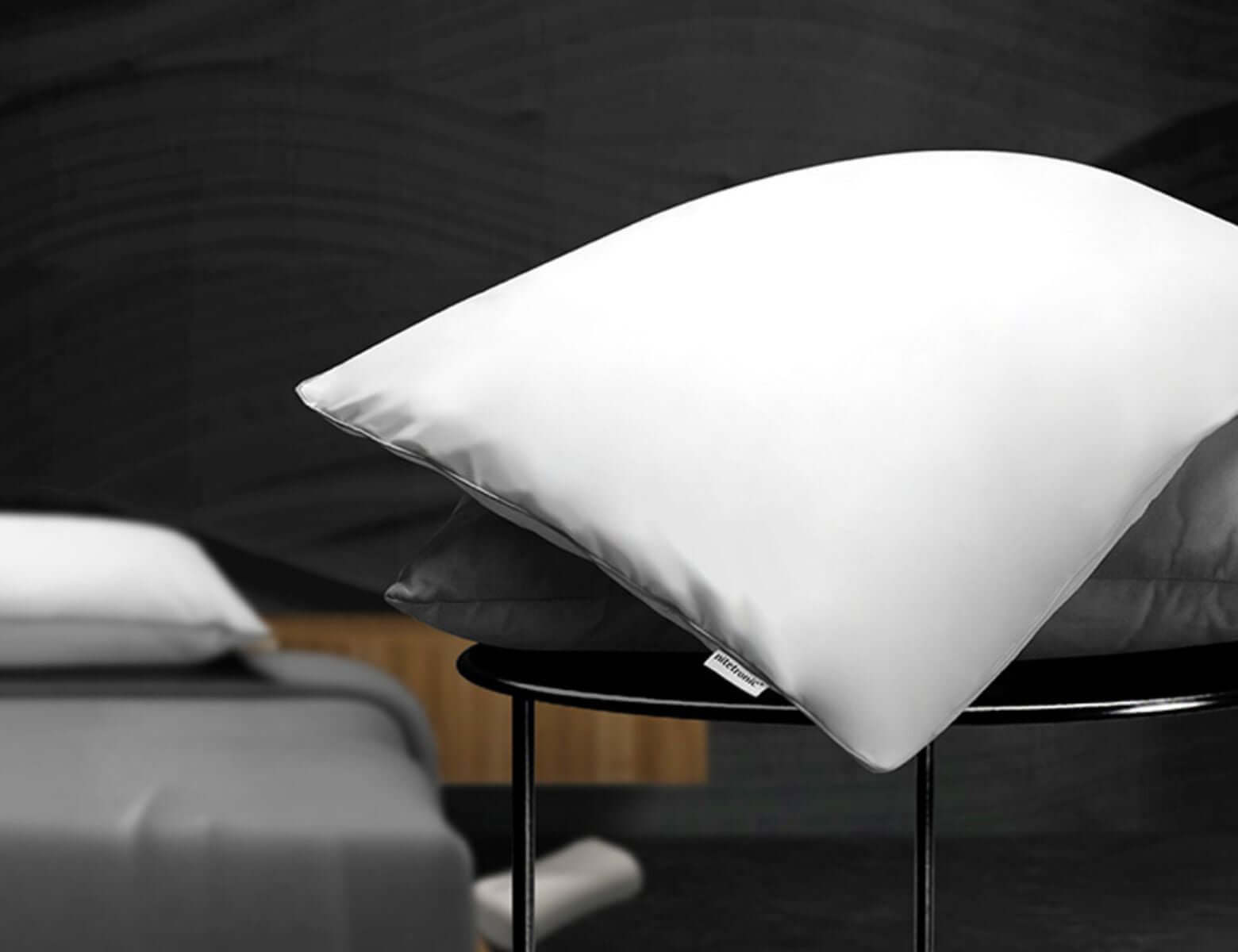
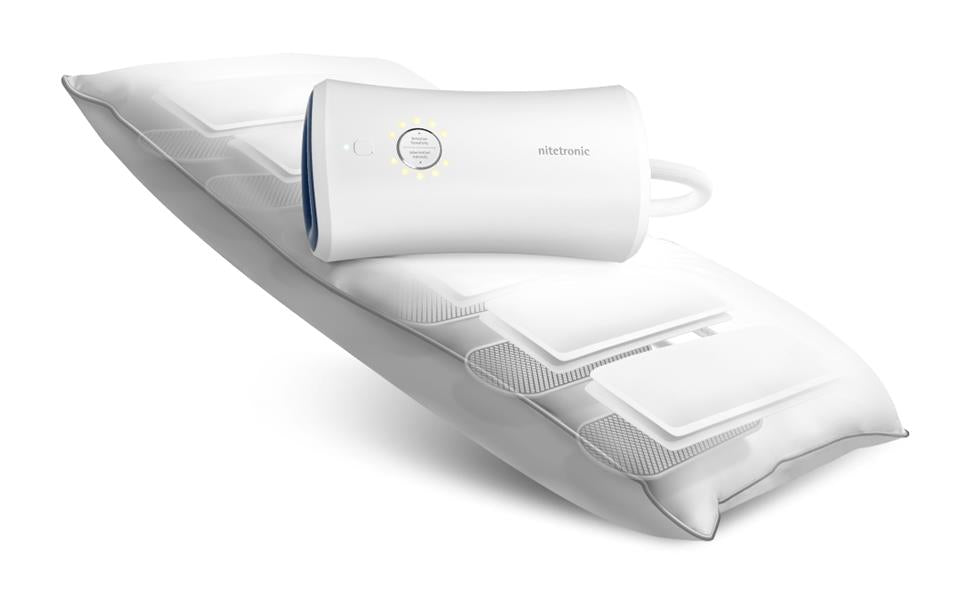
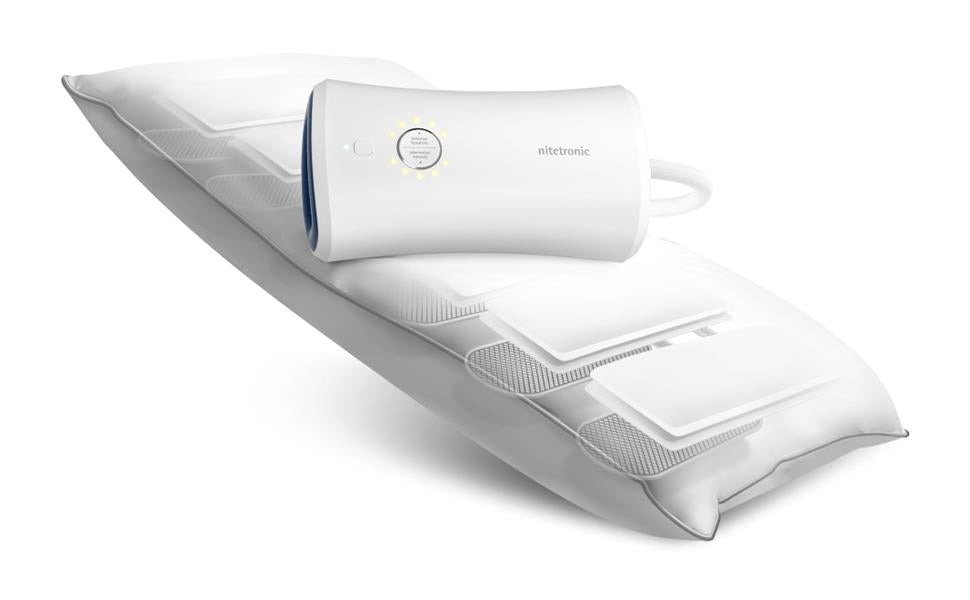
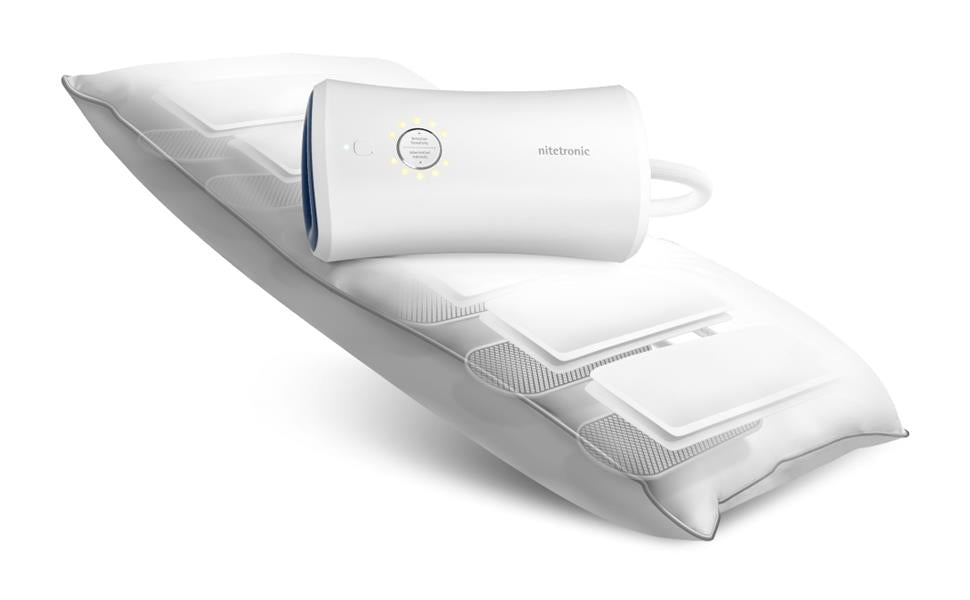
The Nitetronic Z6 Smart Anti-Snore Pillow, for example, uses MEMS and position sensors with six independent airbags. When comparing it with a fixed contour pillow, assess both the underlying memory-foam comfort and the active adjustment system—not merely the product label.
6. Check adjustment range and controls
An adjustable pillow should explain what can be changed. Traditional models may require adding foam, removing inserts or rearranging layers. Powered products may offer buttons or an app. Smart products may also allow sensitivity and intervention settings.
Ask whether the basic functions work without a phone, whether settings are retained after power loss and whether adjustment creates noticeable sound. Convenience matters because a feature that is difficult to use often remains unused.
7. Review the trial and return conditions
Pillow fit is personal, so a meaningful home trial is valuable. Read the minimum-use requirements, return window, packaging rules, hygiene exclusions and return-shipping terms before ordering.
Keep the packaging until you are confident about the fit. Change only one setting at a time and give your body a few nights to adapt unless the pillow causes clear discomfort.
8. Check cleaning and long-term maintenance
Side sleepers place the face close to a large portion of the pillow surface. A removable, compatible pillowcase makes routine care easier. For smart pillows, determine which textiles are washable and which components must remain dry.
Do not machine-wash or soak a pillow containing sensors, wiring or airbags unless the exact instructions permit it. Our smart anti-snore pillow cleaning guide covers a conservative maintenance routine.
A simple three-night fit test
You can evaluate basic fit without changing several variables at once.
**Night 1:** Use the lowest reasonable setting or configuration. Note neck comfort when falling asleep and on waking.
**Night 2:** Increase the height slightly if the head appeared to drop toward the mattress or if the shoulder-to-head gap remained unsupported.
**Night 3:** Keep the more comfortable height and assess whether you can roll between your usual positions without feeling pushed or trapped.
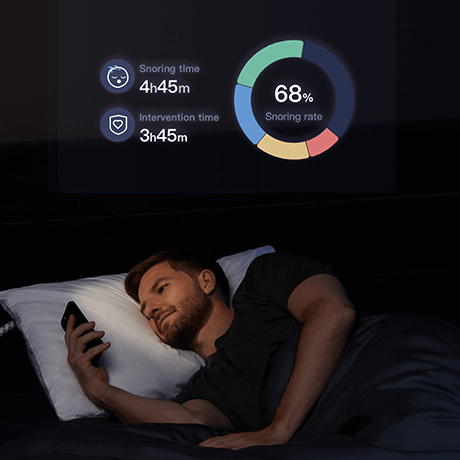
Record bedtime comfort, morning stiffness, awakenings and your usual position. If you use a consumer snoring recorder, compare trends across multiple nights rather than relying on one score. Room noise, alcohol, congestion, fatigue and the presence of another snorer can affect recordings.
Can side sleeping stop snoring?
For some people, snoring is more noticeable while sleeping on the back, so side sleeping may be associated with quieter breathing. But snoring has multiple possible contributors, including nasal congestion, anatomy, alcohol, medication, sleep deprivation and obstructive sleep apnea.
A pillow may support a preferred position or make it easier to stay comfortable on the side. It cannot diagnose the cause of snoring, and it should not be presented as a substitute for prescribed treatment.
Seek medical evaluation if snoring is accompanied by witnessed pauses in breathing, gasping, choking, marked daytime sleepiness, morning headaches or cardiovascular concerns. A pillow is a comfort product, not an emergency or diagnostic device.
Fixed, adjustable or smart: which type fits a side sleeper?
Fixed contour pillow
Best for someone whose preferred height is already known and whose sleep position is consistent. It is usually simple, quiet and less expensive, but the fit cannot be fine-tuned easily.
Manually adjustable pillow
Best for someone willing to test different amounts of fill or different foam layers. It offers customization without electronics, although adjustments usually need to be made before sleep.
Smart anti-snore pillow
Best considered by someone who wants an active response to detected snoring and is comfortable with power, controls and product-specific setup. Evaluate privacy, sound, cleaning, replacement parts and return terms in addition to comfort.
You can compare the current options in the Nitetronic anti-snore pillow collection.
Frequently asked questions
Should a side sleeper use a high pillow?
Side sleepers often need more loft than back or stomach sleepers, but the right height depends on shoulder width, mattress sink and pillow compression. Higher is not always better.
How can I tell if my side-sleeper pillow is too low?
Possible signs include the head visibly tilting toward the mattress, a feeling that the shoulder-to-neck gap is unsupported or repeatedly placing an arm under the pillow for extra height. These signs are not diagnostic.
How can I tell if the pillow is too high?
The head may tilt away from the mattress, the neck may feel pushed upward, or you may struggle to transition comfortably onto your back. Reduce the height and reassess gradually.
Is a firm pillow always better for side sleeping?
No. The pillow needs enough support to maintain its useful height, but firmness is also a comfort preference. A very firm, poorly matched contour can create pressure.
Can an anti-snore pillow treat sleep apnea?
No consumer pillow should replace diagnosis or prescribed sleep-apnea treatment. Anyone with suspected or diagnosed sleep apnea should follow guidance from a qualified clinician.
How long should I test a new pillow?
If it is comfortable and the trial terms allow it, test one configuration for several nights before making a small change. Stop sooner if there is pain, numbness or another concerning symptom.
Final takeaway
The best anti-snore pillow for a side sleeper is the one that fits the individual—not the one with the tallest profile or strongest marketing claim. Start with shoulder width and mattress sink, assess compressed height, consider how often you roll onto your back, and compare the product’s adjustment method, trial terms and care requirements.
Treat positional support as one part of a broader snoring-management plan. A well-fitted pillow may improve comfort and help maintain a preferred position, but persistent or concerning snoring deserves proper medical attention.

Leave a comment
This site is protected by hCaptcha and the hCaptcha Privacy Policy and Terms of Service apply.