







Back sleeping can feel comfortable, but it is also the position in which some people notice more snoring. Gravity may allow the tongue and surrounding soft tissues to move backward, narrowing the upper airway. A pillow cannot diagnose or treat that problem, yet the wrong pillow height can make the head and neck feel poorly aligned—and may make it harder to maintain a comfortable position.
This guide explains how back sleepers can compare pillow height, shape and adjustability without assuming that one product will solve every cause of snoring.
Why back sleeping can make snoring more noticeable
Snoring occurs when airflow causes tissues in the upper airway to vibrate. Sleep position is only one possible influence. Nasal congestion, alcohol, sedating medicines, anatomy, body weight and sleep-related breathing disorders may also matter.
For some people, lying face-up makes snoring louder or more frequent. That does not mean every back sleeper snores, or that changing pillows will address the underlying cause. It means position is a useful variable to observe across several nights.
If you are unsure whether position matters, use our seven-night guide to position-related snoring before making a purchase decision.
Pillow height: avoid both extremes
The goal is comfortable support, not maximum elevation.
A pillow that is too high may push the chin toward the chest and leave the neck flexed. A pillow that is too low may let the head tilt backward or fail to support the natural curve of the neck. Either extreme can cause discomfort, stiffness or repeated position changes.
The correct compressed height depends on several factors:
- the shape of your head, neck and upper back;
- the firmness of your mattress;
- how much the pillow compresses under load;
- whether your shoulders rest partly on the pillow;
- whether you remain on your back or frequently roll to one side.
Measure how the pillow feels after several minutes, not just its uncompressed height on a product page.
Contour matters as much as loft
A flat slab of foam and a contoured pillow can have the same maximum height but feel very different. A gentle neck-support zone may help fill the space beneath the cervical curve while allowing the back of the head to rest slightly lower.
Look for a shape that supports rather than forces. Deep hollows, steep edges or aggressive elevation may be uncomfortable for people with limited neck mobility. If you already have neck pain, recent injury or a medical condition affecting movement, ask a qualified clinician for individualized guidance.
Fixed, adjustable and smart pillows
Back sleepers can choose among three broad designs.
Fixed-shape pillows
These are simple and require no setup. Their main limitation is fit: the selected height and contour cannot be changed if your mattress, body or preferred position differs from the intended design.
Manually adjustable pillows
Removable inserts or fill let you change loft. This can be useful when you are still learning which height feels balanced. Make small adjustments and test each configuration for more than one night when practical.
Sensor-guided smart pillows
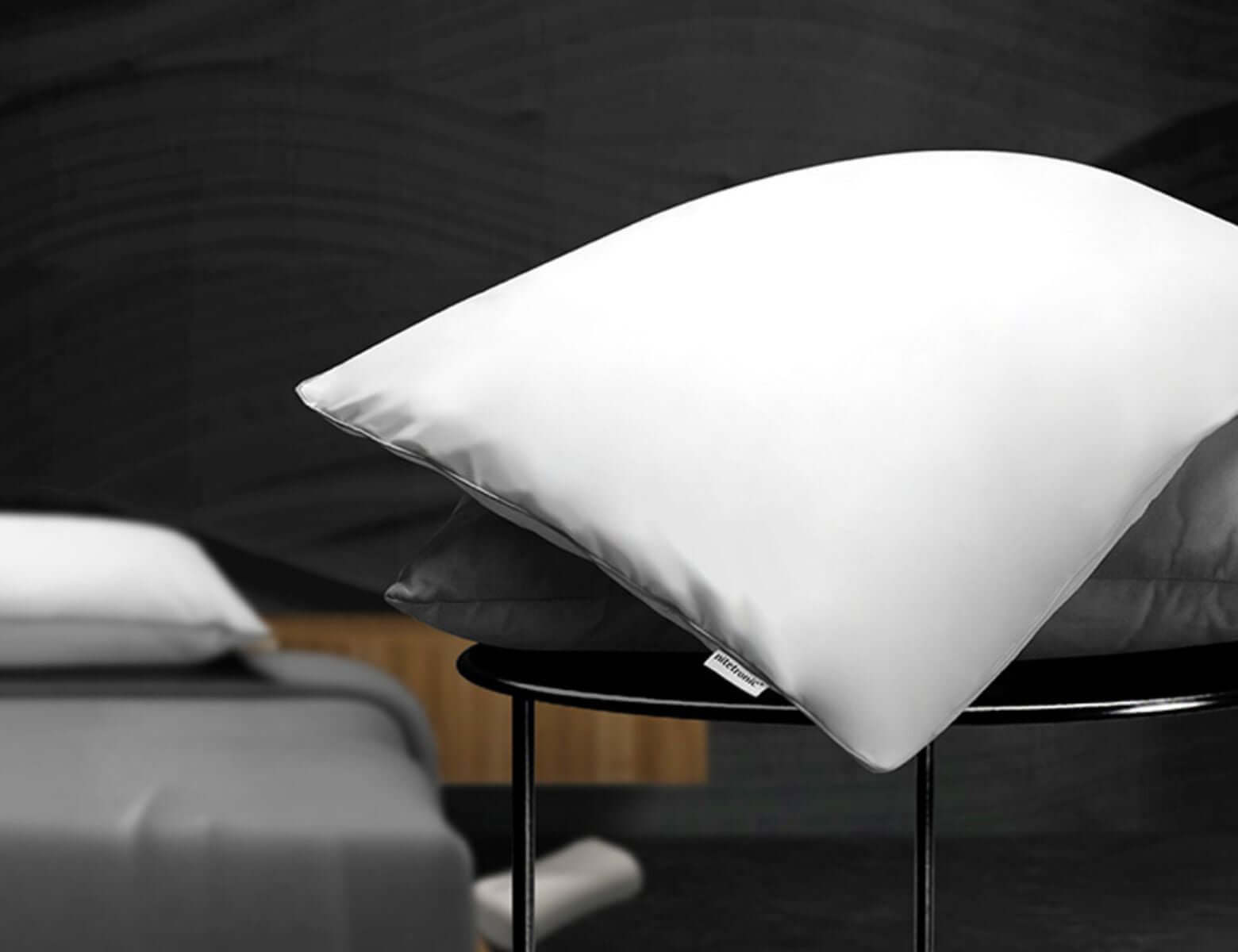
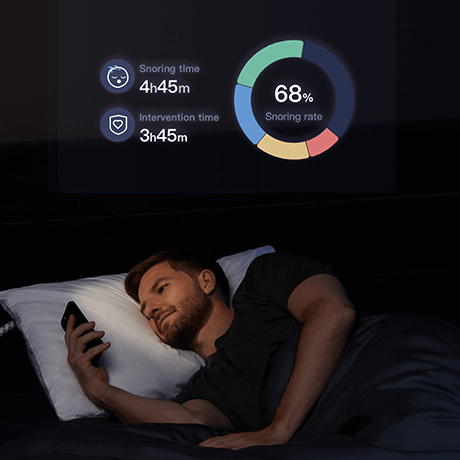
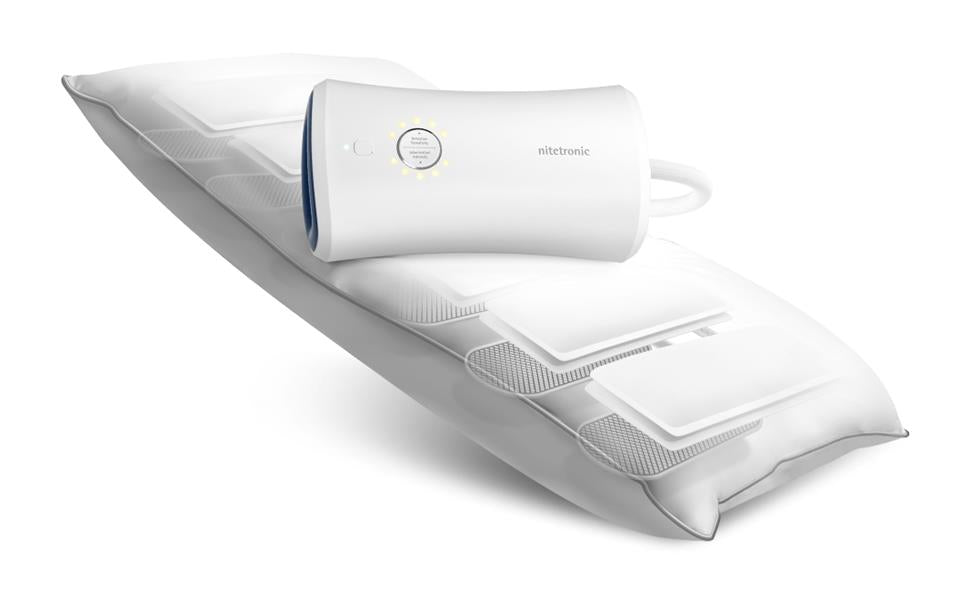
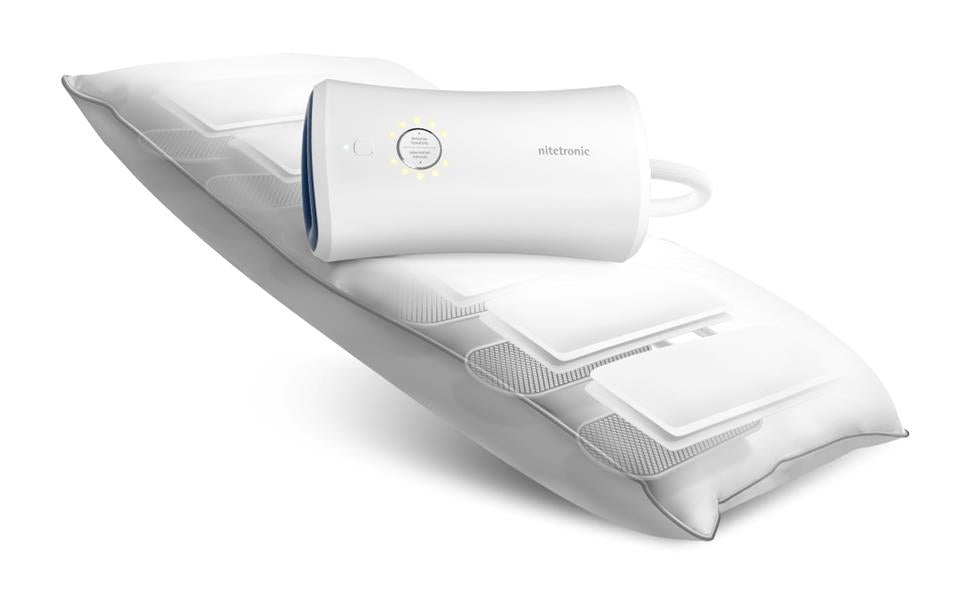
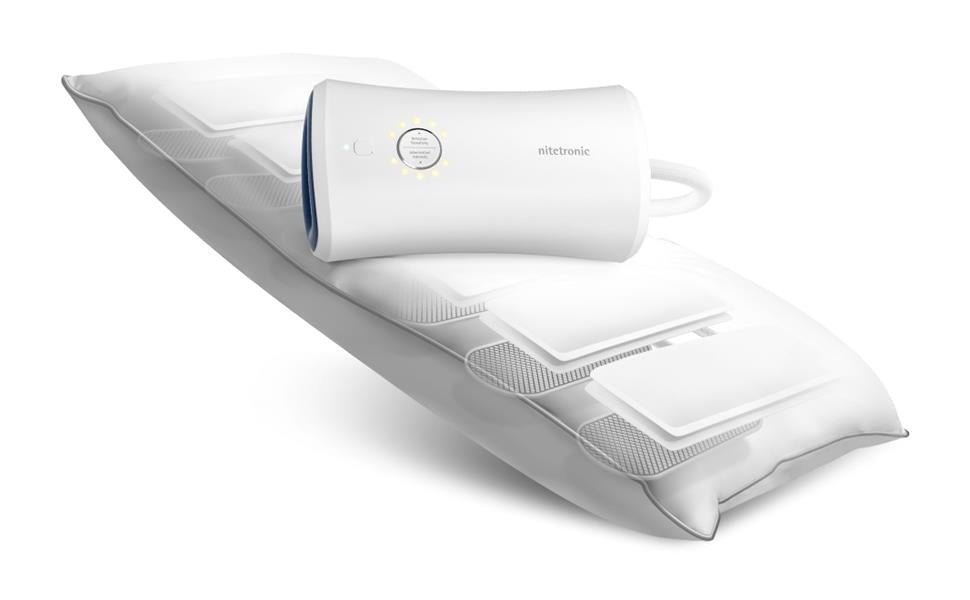
Some smart pillows listen for snoring sounds and make gentle positional adjustments. The Nitetronic Z6 Smart Anti-Snore Pillow, for example, combines memory foam, sensors and six independent air chambers. It is a consumer sleep-support product, not a diagnostic device or a replacement for prescribed treatment.
When comparing smart designs, check the adjustment method, operating noise, power requirements, app privacy information, cleaning instructions, warranty and return terms—not only the word “smart.”
What if you roll from your back to your side?
Many people are combination sleepers. A height that feels balanced when facing upward may be too low after you roll onto your side, because the shoulder creates a larger gap between the head and mattress.
Possible solutions include:
- a contoured pillow with different center and side zones;
- a manually adjustable design that offers a workable compromise;
- a responsive design that changes support during the night;
- a body pillow that makes a preferred side position easier to maintain.
No design guarantees that you will remain in one position. Comfort and repeatability matter more than a dramatic first impression.
A simple home-fit check
Use this process before deciding whether a pillow suits you:
- Lie on your usual mattress with your head centered on the pillow.
- Allow several minutes for foam or fill to compress.
- Notice whether the chin feels pushed sharply toward the chest or lifted upward.
- Check for pressure beneath the skull and tension across the shoulders.
- Roll gently to your usual secondary position and reassess support.
- Track comfort, awakenings, morning stiffness and snoring trends for several nights.
Change one variable at a time. A new pillow, different bedtime, alcohol, congestion and a new recording app introduced together make the result difficult to interpret.
How to judge snoring changes responsibly
A phone app or smart-pillow report may help compare trends, but it is not a sleep study. Bedroom noise, a partner, television, fans, pets and device placement can affect sound detection.
Compare several nights under reasonably similar conditions. Useful observations include your usual position, perceived comfort, awakenings and a partner's observations. Do not interpret a lower consumer-app score as proof that an airway disorder has been treated.
For a broader product comparison, review our anti-snore pillow buying guide or browse the Nitetronic anti-snore pillow collection.
When a pillow is not enough
Persistent loud snoring deserves attention, particularly when accompanied by witnessed breathing pauses, choking or gasping, marked daytime sleepiness, morning headaches or difficulty concentrating. These signs may require assessment by a qualified healthcare professional.
A pillow can support comfort and positioning. It should not replace a sleep study, CPAP, an oral appliance or other care recommended by a clinician.
FAQ
What pillow height is best for a back sleeper who snores?
There is no universal height. The pillow should support the head and neck without sharply pushing the chin toward the chest or allowing the head to tilt uncomfortably backward. Mattress firmness and pillow compression change the effective height.
Is a higher pillow always better for snoring?
No. Excessive height can create uncomfortable neck flexion. Elevation and support should be assessed for comfort and alignment rather than maximized.
Can a back sleeper use a contoured pillow?
Yes, if the center and neck-support zones fit the person's body and mattress. A contour should feel supportive rather than restrictive.
Can an anti-snore pillow treat sleep apnea?
No. Consumer pillows do not diagnose or treat obstructive sleep apnea and should not replace prescribed therapy. Seek medical advice when snoring includes breathing pauses, gasping or significant daytime symptoms.
How long should I test a new pillow?
Several nights can reveal comfort and position patterns, provided other variables remain reasonably stable. Stop sooner if the pillow causes pain, numbness or repeated awakenings.
The practical takeaway
For a back sleeper, the best anti-snore pillow is not automatically the highest or firmest option. Start with a comfortable compressed height, assess the contour on your own mattress, account for side sleeping and compare multi-night trends. Treat a pillow as one positioning and comfort tool—and treat persistent or concerning snoring as a reason to seek professional guidance.

Leave a comment
This site is protected by hCaptcha and the hCaptcha Privacy Policy and Terms of Service apply.