






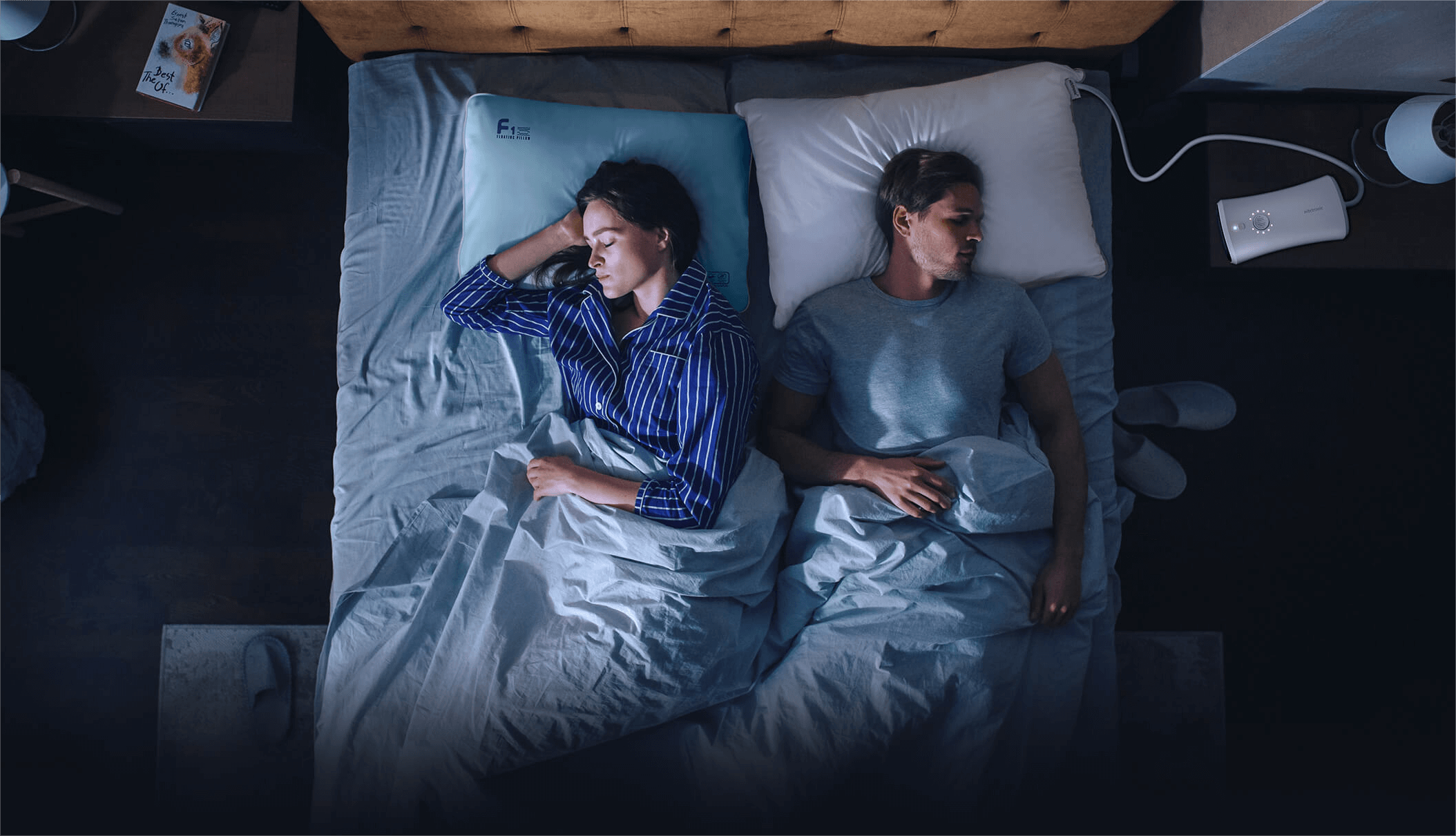
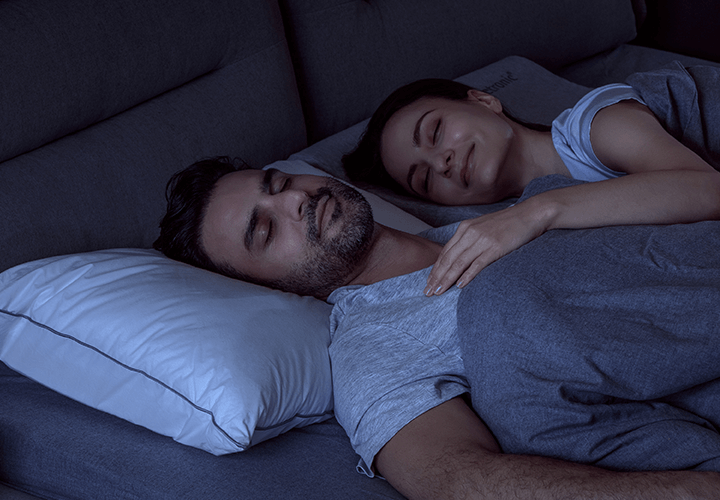
A smart anti-snore pillow cannot respond correctly if the user treats it like an ordinary flat pillow. Head placement affects comfort, position sensing and which adjustable zone can respond. The goal is not to find one exact spot measured to the millimeter, but to place the head within the intended support area while keeping the neck comfortable.
This guide explains how to check orientation, head position and movement without making medical claims about the result.
Start by identifying the correct orientation
Before lying down, check the product manual and any labels on the pillow. Contoured pillows may have a higher neck edge, a lower center zone or different surfaces for the head and shoulders.
Do not decide orientation only from the logo. The power cable, control unit, removable height pad and pillowcase opening may also indicate how the product should be positioned.
Center the head within the active area
Begin with the back of the head near the center of the intended sleeping surface. The neck should rest on the support zone rather than hanging above the mattress or being forced onto a steep edge.
For a sensor-guided pillow, centering helps the position sensors identify where the user is lying. It also gives adjustable zones room to make a gentle change in either direction.
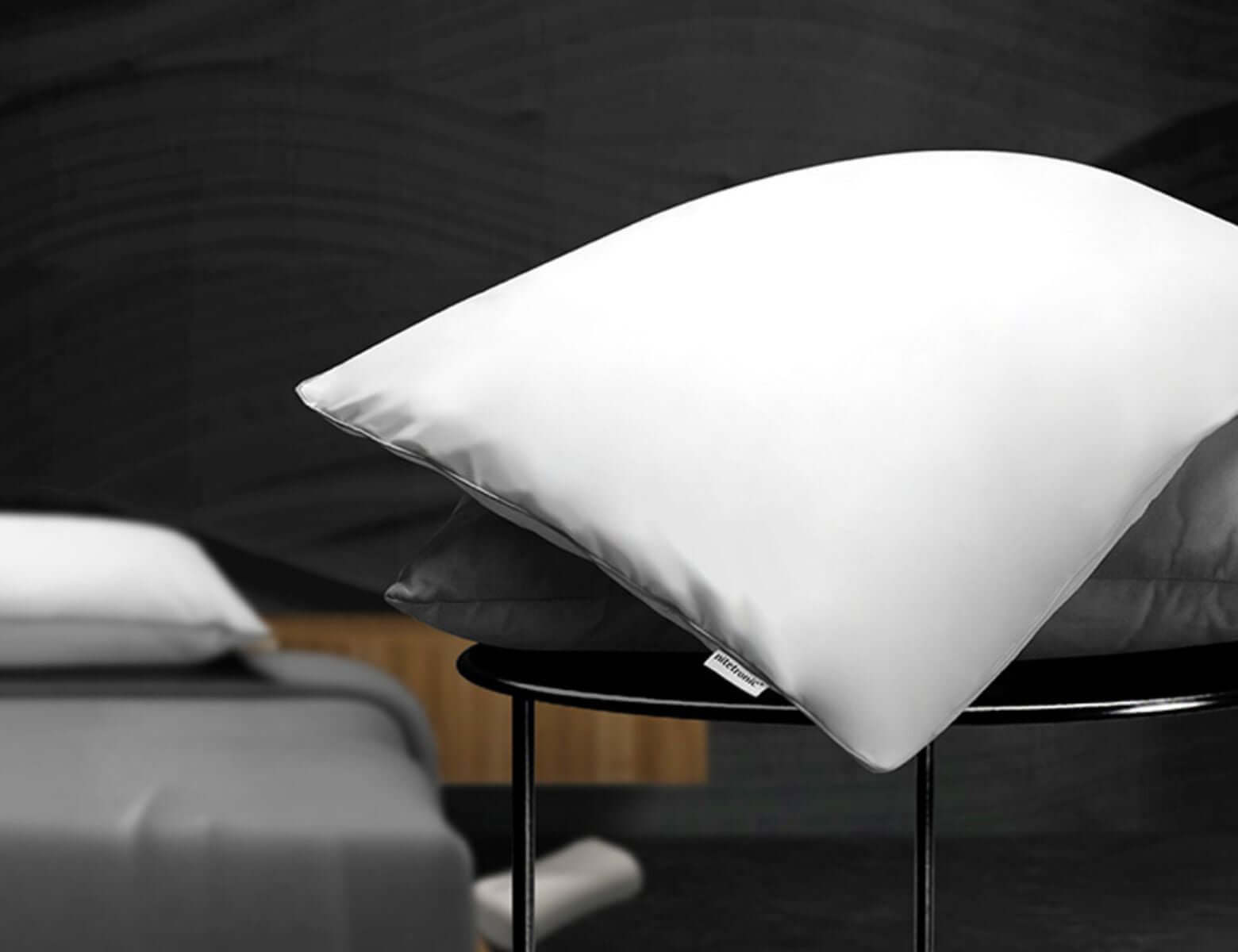
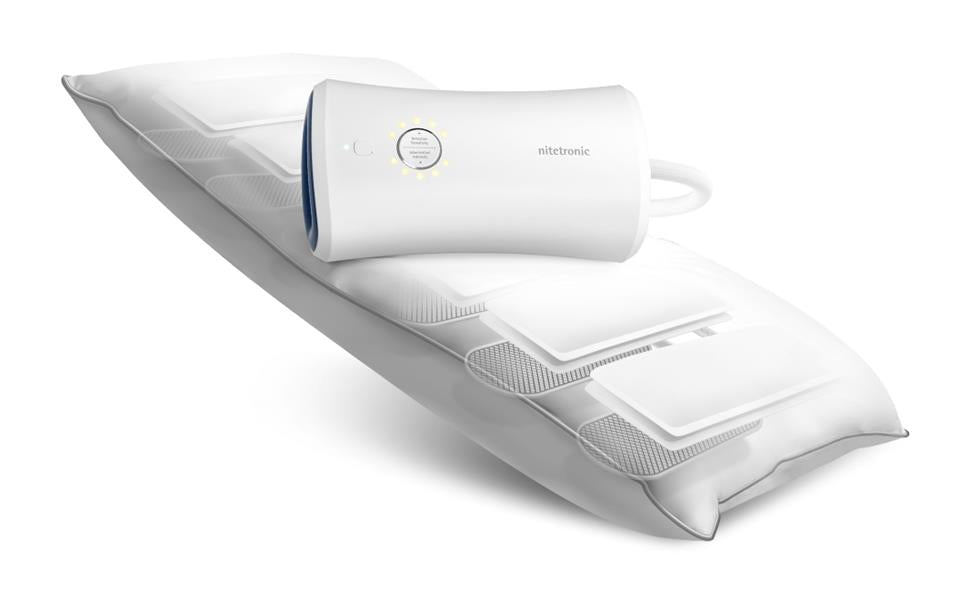
The Nitetronic Z6 Smart Anti-Snore Pillow, for example, uses position sensors and six independent air chambers across the pillow. The chambers are designed to respond according to head location, but the user still needs to lie within the intended area.
Keep the shoulders in the intended position
Some sleepers pull a pillow far beneath the shoulders, while others place only the very top of the head on it. Either extreme can change the effective height and contour.
Follow the model-specific instructions. Unless the design explicitly supports the upper shoulders, begin with the shoulders on the mattress and the neck supported near the pillow edge. Allow several minutes for foam and mattress layers to compress before judging the fit.
Check the chin and neck angle
When lying on the back, the pillow should not push the chin sharply toward the chest or allow the head to tilt uncomfortably backward.
When lying on the side, the pillow should fill the shoulder-to-head gap without creating an obvious upward or downward tilt. Mattress firmness and shoulder width affect the required height.
Read our guides for back sleepers and side sleepers for more detailed fit checks.
What if you move during the night?
Normal sleepers change position. A smart pillow should not require someone to remain perfectly still, but its sensing and adjustment range still have limits.
If you frequently move beyond the pillow edge, consider:
- whether the pillow is centered on the mattress;
- whether another pillow or headboard pushes it out of position;
- whether the fitted case is pulling the contour sideways;
- whether the selected height feels comfortable in both primary positions;
- whether the power cable allows the pillow to remain flat and stable.
Do not use straps, clips or improvised restraints to keep the head in place.
Use only a compatible pillowcase
A tight case can compress the contour or restrict moving sections. A loose case can bunch beneath the face and change where the head settles.
The case should follow the shape without stretching tightly. For more detail, see our smart anti-snore pillowcase guide.
Run a daytime function check
Before relying on the pillow overnight, follow the manufacturer's setup or demonstration procedure. Confirm that:
- the pillow is connected to the correct power source;
- the control unit or app reports normal operation;
- the pillow responds in its approved test mode;
- no fabric or bedding blocks the adjustable zones;
- cables and hoses are not bent or trapped.
Do not imitate snoring into the sensor repeatedly unless the manual recommends that method. A demonstration mode is usually a clearer mechanical check when available.
Do not chase one-night results
Head placement should first be judged by comfort and correct operation. A quieter recording on one night does not prove that the position is ideal.
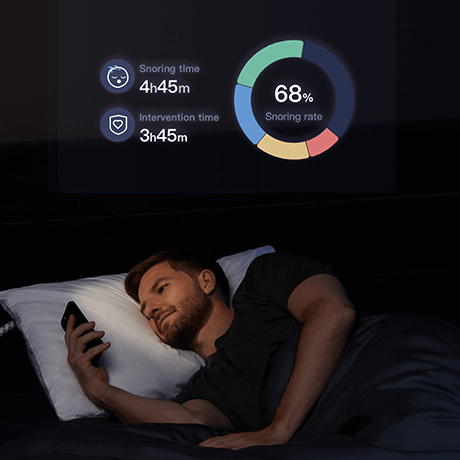
Consumer recordings can be affected by a partner, fans, traffic, television, pets, congestion, alcohol and device placement. Compare several nights under reasonably similar conditions, changing one setting at a time.
Common placement mistakes
- Using the pillow backward
- Resting only the crown of the head on the active area
- Pulling too much of the pillow beneath the shoulders
- Adding another pillow on top
- Using an undersized or rigid pillowcase
- Placing cables beneath the pillow
- Selecting maximum height or intervention strength immediately
Adding another pillow or thick object can also interfere with head-position sensing. Use only approved height pads or accessories.
When placement is not the real issue
Snoring can relate to position, but it can also involve congestion, alcohol, anatomy, body weight, medicines or a sleep-related breathing disorder.
Seek qualified medical advice when persistent loud snoring occurs with witnessed breathing pauses, choking, gasping, marked daytime sleepiness, morning headaches or concentration problems. A smart pillow cannot diagnose obstructive sleep apnea and should not replace CPAP or other prescribed care.
FAQ
Must my head stay exactly in the center?
Not necessarily. Follow the model's intended sleeping area. Multi-zone pillows can usually accommodate movement, but lying near or beyond the edge may reduce effective sensing or adjustment.
Should my shoulders be on the pillow?
It depends on the design. Unless the instructions specify shoulder support, begin with the shoulders on the mattress and the neck resting near the pillow edge.
Can I place another pillow underneath?
Use only the manufacturer's approved height pads or accessories. Improvised layers can change stability, sensor performance and neck angle.
Why does the pillow adjust when I am not snoring?
Possible causes include sensitivity settings, environmental noise, movement or incorrect setup. Recheck orientation, recalibrate as directed and consult the product instructions.
Can correct head placement treat sleep apnea?
No. Positioning may support comfort, but it does not replace medical assessment or prescribed sleep-apnea treatment.
The practical takeaway
Place the pillow in the correct orientation, begin with the head within the central active area, keep the neck comfortable and use compatible bedding. Then verify operation and compare trends across several nights rather than judging a single recording.

Leave a comment
This site is protected by hCaptcha and the hCaptcha Privacy Policy and Terms of Service apply.