




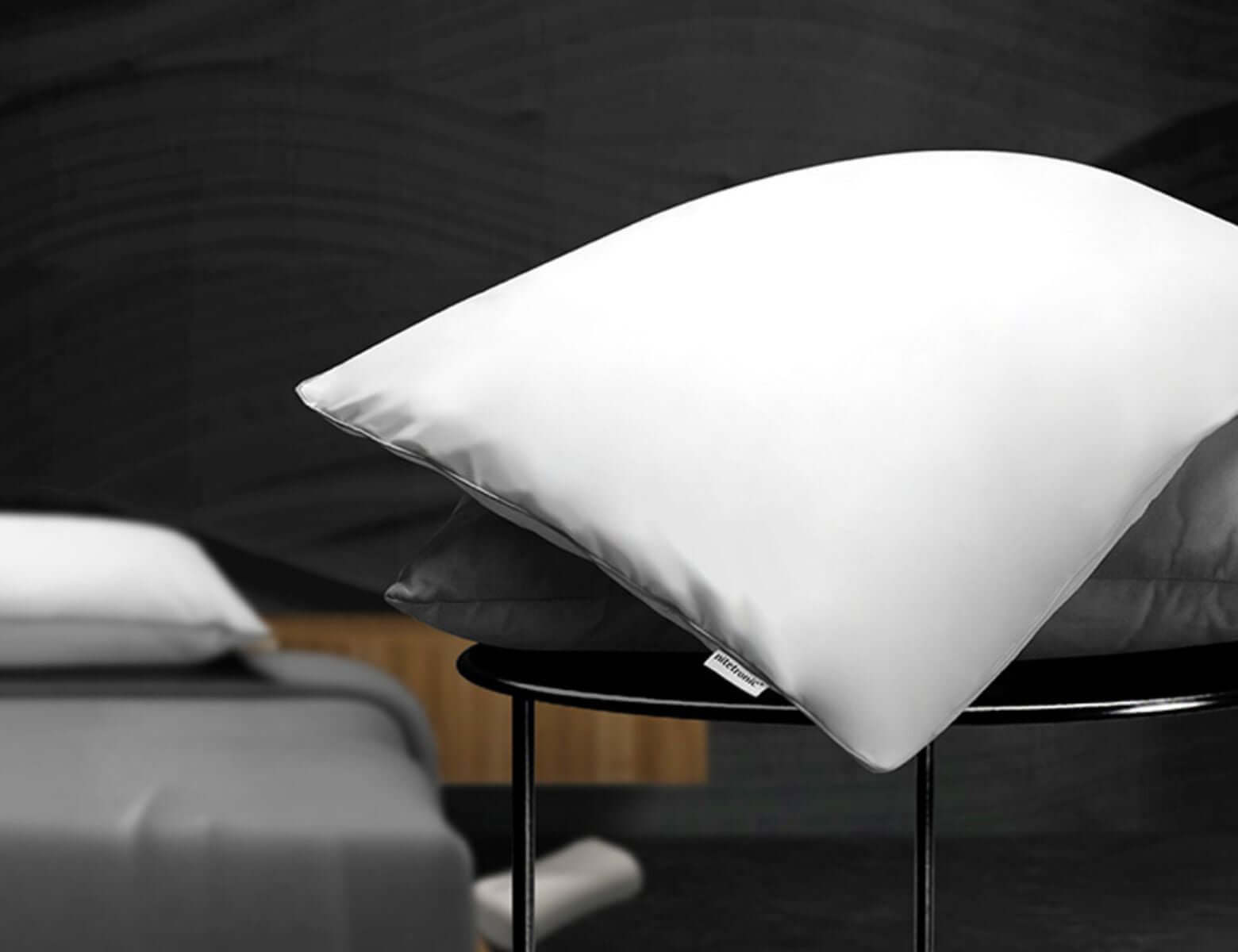



A pillowcase seems like a simple accessory, but the wrong one can change how a contoured or adjustable pillow feels. A case that is too tight may compress the edges, restrict movement or distort the contour. One that is too loose may bunch beneath the face and interfere with comfort.
For smart anti-snore pillows, fit, stretch, breathability and care instructions matter more than decorative style.
Start with the exact pillow dimensions
Do not assume that “standard,” “queen” or “king” will fit a shaped smart pillow. Measure the widest, longest and highest points, then compare those dimensions with the manufacturer’s compatible case.
Contoured pillows may have raised neck zones, center hollows, side panels or attached components that make a flat rectangular case unsuitable even when the listed length and width appear correct.
Avoid excessive tension
A pillowcase should follow the surface without pulling it flat. Excessive tension can:
- compress raised contour zones;
- make a soft pillow feel firmer;
- restrict the movement of adjustable sections;
- create pressure around seams and zippers;
- change the effective pillow height.
After fitting the case, compare the pillow with and without it. The contour should remain visible and the material should not feel stretched like a drum.
Check whether the pillow actively changes shape
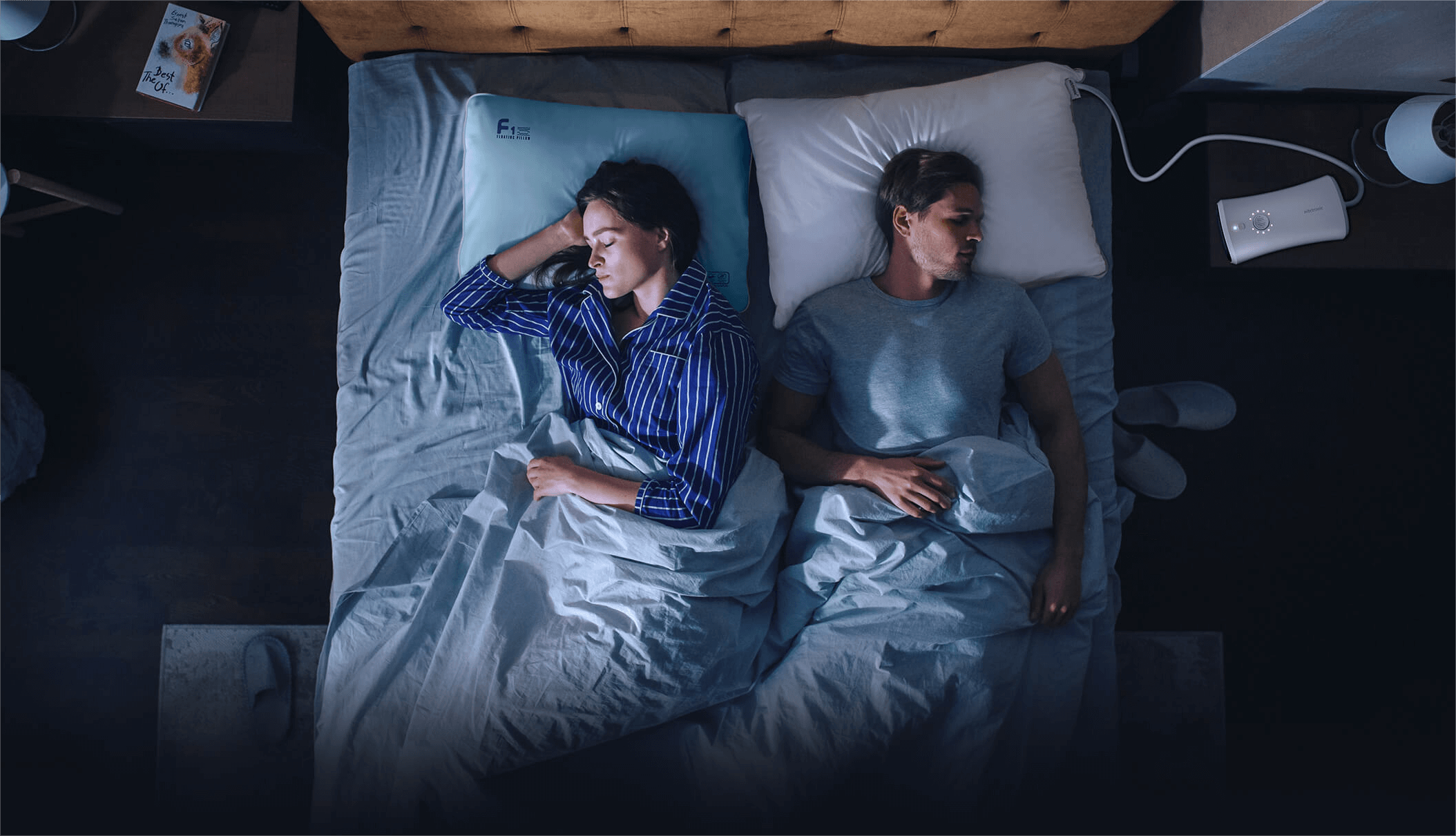
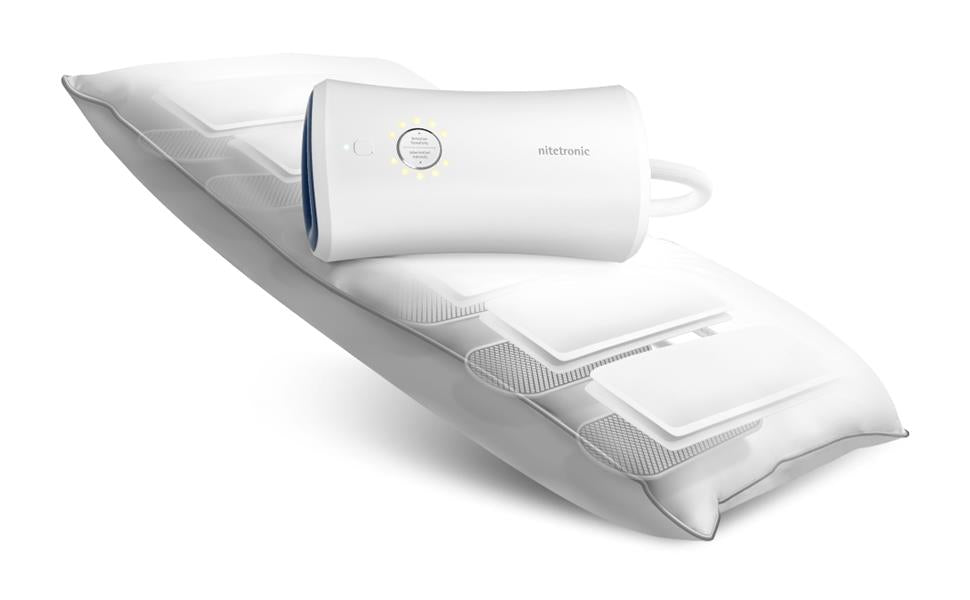
Some smart pillows use air chambers or other mechanisms to make gentle positional adjustments. The Nitetronic Z6 Smart Anti-Snore Pillow, for example, combines memory foam, sensors and six independent air chambers.
A compatible case should allow those sections to move without binding. Thick, rigid or undersized fabric may reduce the perceived movement. Never add straps, clips or tight covers near hoses, cables, controls or moving zones unless the manufacturer specifically approves them.
Choose breathable, comfortable fabric
Common pillowcase materials include cotton, polyester blends and cooling fabrics. Each has tradeoffs.
- **Cotton:** familiar, breathable and generally easy to wash.
- **Polyester blend:** durable and often quick-drying, but feel and breathability vary.
- **Cooling fabric:** may feel cooler initially, although room temperature, humidity and personal preference still matter.
- **Heavy decorative fabric:** may be less flexible and can alter the feel of a contoured surface.
Fabric marketing cannot compensate for an uncomfortable pillow height or firmness. Fit the pillow first, then choose the textile.
Inspect seams, zippers and closures
Seams should not sit under a high-pressure area of the face or neck. Hidden zippers can create a tidy fit, but the pull tab should remain away from the skin and any electronic parts.
Envelope closures are simple but may allow more movement. Elastic edges can work if the tension is gentle and evenly distributed.
Use only the approved number of layers
Adding a protector and multiple pillowcases can change breathability, contour and movement. If protection from sweat or skin oils is important, select a thin compatible protector rather than stacking several tight layers.
Waterproof barriers may trap heat or create noise. They also must not cover ventilation areas or electronic components in a way the manufacturer prohibits.
Follow model-specific cleaning instructions
The removable case may be washable even when the pillow body is not. Smart-pillow components—including sensors, controls, pumps, wiring and air systems—must generally remain dry unless the instructions explicitly state otherwise.
Before washing:
- Remove the case completely.
- Close zippers or fasteners as directed.
- Check the care label for temperature and cycle.
- Avoid bleach or high heat unless permitted.
- Dry the case fully before reinstalling it.
Read our smart anti-snore pillow cleaning guide for a broader maintenance checklist.
Test the case after washing
Fabric can shrink, stretch or twist after laundering. Refit the case and check:
- whether the contour remains natural;
- whether adjustable zones can move;
- whether seams have shifted into pressure areas;
- whether the zipper closes without force;
- whether the pillow feels noticeably higher or firmer.
Stop using a case that pulls tightly, damages cables or prevents normal operation.
Does a pillowcase affect snoring?
A pillowcase does not treat snoring. Its role is to preserve comfort, hygiene and the intended pillow shape. If a tight case changes the contour or restricts adjustment, it may indirectly change how the pillow supports position, but that is not a medical effect.
Snoring can relate to position, congestion, alcohol, anatomy, body weight, medicines or a sleep-related breathing disorder. Persistent loud snoring with breathing pauses, choking, gasping or marked daytime sleepiness requires medical advice.
A buying checklist
Before ordering a replacement case, confirm:
- exact model compatibility;
- internal dimensions and stretch;
- clearance for moving or contoured zones;
- seam and closure placement;
- washing and drying limits;
- return terms after opening;
- whether a protector is approved.
You can browse the Nitetronic anti-snore pillow collection or review our anti-snore pillow buying guide for additional fit considerations.
FAQ
Can I use a standard pillowcase on a smart pillow?
Only if the dimensions, contour and adjustment mechanism are compatible. A standard case may be too tight or poorly shaped.
Can a tight pillowcase make a pillow feel firmer?
Yes. Tension can compress the surface and restrict how foam, fill or adjustable zones respond.
Should I use a waterproof protector?
Use one only if it is compatible with the exact model and does not block movement, ventilation or approved access points.
How often should the pillowcase be washed?
Follow the care label and adjust for personal use, skin products and perspiration. Keep the pillow body and electronics dry.
Can a pillowcase reduce snoring?
No. A case supports hygiene and intended pillow function; it is not a snoring treatment.
The practical takeaway
Choose a pillowcase as part of the pillow system. Confirm model compatibility, avoid excessive tension, preserve moving and contoured zones, and follow the exact care instructions. The best case protects the pillow without changing how it is designed to feel or move.


Leave a comment
This site is protected by hCaptcha and the hCaptcha Privacy Policy and Terms of Service apply.